IN THIS ISSUE...
FALL 2019 VOLUME 65 NUMBER 3
PLANT SCIENCE
BULLETIN
A PUBLICATION OF THE BOTANICAL SOCIETY OF AMERICA
Meet new BSA Student Representative,
Shelly Gaynor.... p. 177
Students beta-testing new
PlantingScience module.... p. 174
Old trees meet new technology.... p. 156
Botany 2019: A Fantastic Time in Tucson!
Fall 2019 Volume 65 Number 3
PLANT SCIENCE BULLETIN
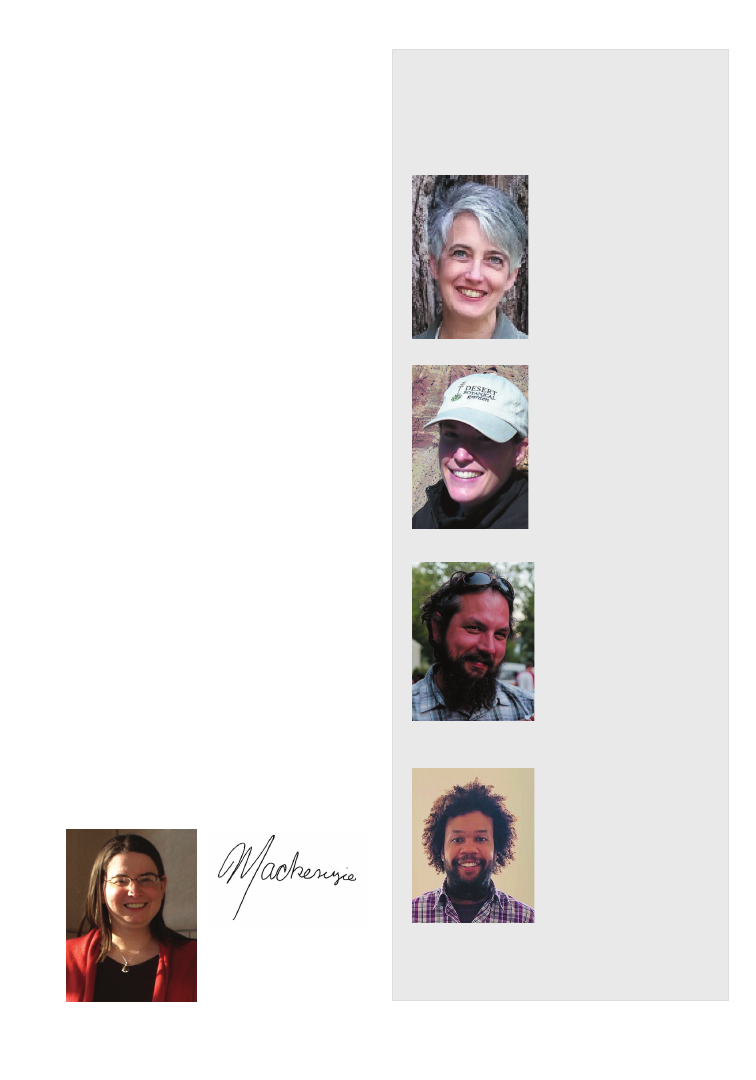
Editorial Committee
Volume 65
From the Editor
Melanie Link-Perez
(2019)
Department of Botany
& Plant Pathology
Oregon State University
Corvallis, OR 97331
melanie.link-perez
@oregonstate.edu
Shannon Fehlberg
(2020)
Research and Conservation
Desert Botanical Garden
Phoenix, AZ 85008
sfehlberg@dbg.org
David Tank
(2021)
Department of Biological
Sciences
University of Idaho
Moscow, ID 83844
dtank@uidaho.edu
James McDaniel
(2022)
Botany Department
University of Wisconsin Madison
Madison, WI 53706
jlmcdaniel@wisc.edu
Greetings,
I hope that those of you who made the
trip to Tucson found this year’s Botany
meeting to be productive and stimulat-
ing. It was my first time in Arizona and
I particularly enjoyed the landscape.
As always, we are pleased to list the
winners of awards that were presented
during the meeting. Congratulations
to all!
I want to highlight a pair of articles in
this issue that address botanical ed-
ucation for general audiences—one
looking back at the work of influential
past botanists and the other focusing
on using modern social media tools to
engage the community. It is important
and inspiring to consider those who use
creative and contemporary resources
to promote plant and environmental
science. Many in our professional com-
munity are doing incredible outreach
with both local and global audiences.
At PSB, we are always pleased at high-
light those projects, either as articles or
as features in the Education News and
Notes section.

143
TABLE OF CONTENTS
SOCIETY NEWS
Public Policy Committee Report Supporting Evidence-Based Policy
Through Public Comments ............................................................................................................................144
BSA Promotes Author Workshop at the XXI Congreso Mexicano de Botánica in
Aguascalientes, Mexico ...................................................................................................................................146
New
AJB Reviews
Feature Coming In 2020 ............................................................................................147
BSA Members Participate in 2019 Climate Strike ...............................................................................147
Botanical Society of America’s Award Winners
(Part 2)
...................................................................148
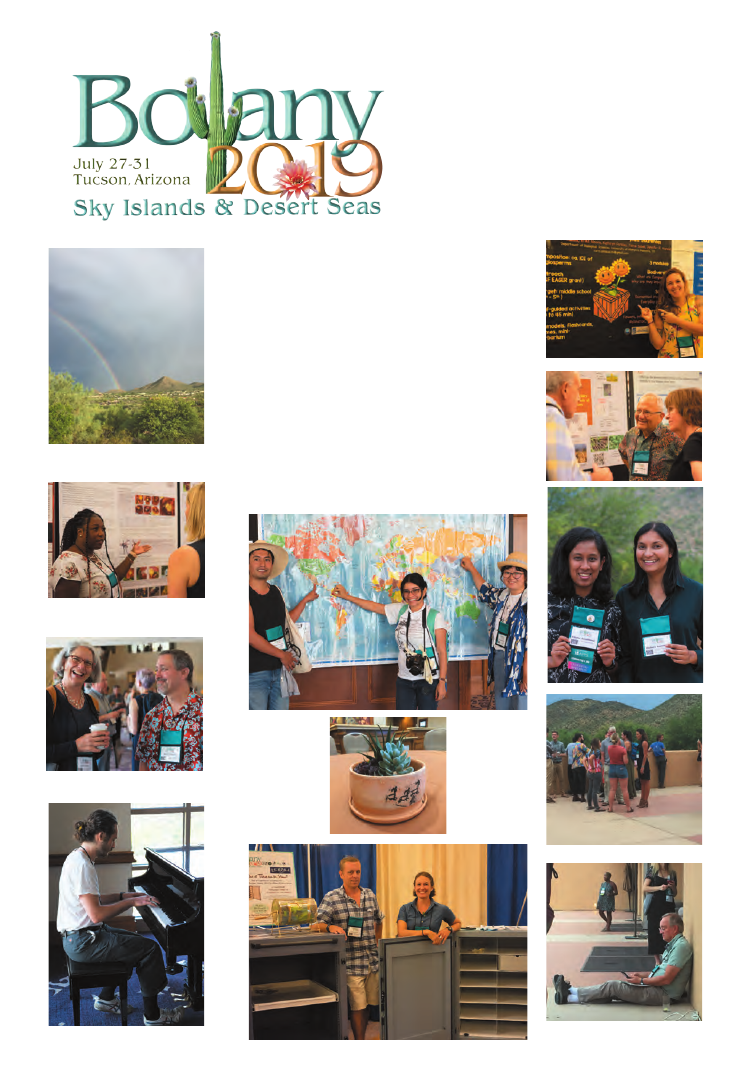
Botany 2019 - It's More Than Just Another Scientific Conference! ..........................................153
SPECIAL FEATURES
Old Trees Meet New Technology ...................................................................................................................156
Inspirational Voices in Early Botanical Education .................................................................................161
SCIENCE EDUCATION
“Botanists: See Zoologists and Wildlife Biologists”: Seeking Resources on
Careers for Plant People ................................................................................................................................172
PlantingScience Launches new “Plants Get Sick, Too!” Theme in Collaboration
with American Phytopathological Society .............................................................................................174
Thanks to PlantingScience’s Early-Career Scientist Support Team .........................................175
STUDENT SECTION
Getting to Know Your New Student Representative: Shelly Gaynor ...........................................177
Quick Notes on the Botany 2019 Conference .......................................................................................179
ANNOUNCEMENTS
New BSA Social Media Liaisons Selected for 2019-2020..............................................................180
Harvard University: Bullard Fellowships in Forest Research ...........................................................181
In Memoriam
Personal Reflections on a Guiding Light: Winslow R. Briggs (1928-2019) ........................182
Arthur Oliver Tucker, III (1945-2019) ........................................................................................................185
W. Mark Whitten (1954–2019) ....................................................................................................................188
BOOK REVIEWS
Biographies ..................................................................................................................................................................192
Ecology ..........................................................................................................................................................................195
Economic Botany .....................................................................................................................................................196
Physiology ....................................................................................................................................................................197
Systematics.................................................................................................................................................................199

144
SOCIETY NEWS
Public Policy Committee Report
Supporting Evidence-Based Policy
Through Public Comments
By BSA PPC Co-Chairs Krissa Skogen (Chicago Botanic
Garden) and Kal Tuominen (Metropolitan State University)
and ASPT PPC Chair Andrew Pais (North Carolina State
University)
During the past year, we have highlighted
ways that BSA members can support science-
friendly candidates and legislation to increase
the capacity for botanical expertise in the
federal workforce (PSB 65[1]: 2019). Winners
of this year’s (BSA) Public Policy Awards,
(ASPT) Congressional Visits Day Award and
(BSA/ASPT) Botany Advocacy Leadership
Award have also described their experiences
reaching out to elected officials (PSB 65[2]:
2019). Another way our members have
engaged in public policy is by providing public
comments on proposed rules or rule changes.
Public comments can be a highly effective
way of leveraging your subject matter
expertise to create positive change. However,
many scientists are unaware of what a public
comment is or how governments use them.
While new laws are introduced by parts of the
legislative branch (e.g., the federal House of
Representatives), proposed rules are created
by parts of the executive branch (e.g., the
Environmental Protection Agency) in order to
carry out existing laws (e.g., the Endangered
Species Act). Because civil servants with
technical expertise are often involved in
proposing and altering rules, public comments
can be surprisingly similar to writing or orally
presenting research findings to a scientific
audience. Here we provide some tips for how
to get started with your first public comment.
IDENTIFYING YOUR
SUBJECT MATTER
EXPERTISE
Within the scientific
community, we often assume
that our subject matter
expertise begins and ends
with our own research. In
the context of public policy,
however, that expertise is
far broader. What graduate-
level STEM courses have you
completed or do you teach?
What topics did your graduate
committee expect you to

PSB 65 (3) 2019
145
discuss during comprehensive exams? Have
you been a co-author on any side projects?
Have you used your scientific training to
help a nonprofit organization become more
effective? How do you explain the relevance
of your work to friends and neighbors? The
answers to these questions can help you
identify what your subject matter expertise
looks like to elected officials. It is likely that
you have expertise in many subjects, or that
you have not fully constructed the nature of
your expertise in the context of a particular
policy issue that interests you!
IDENTIFYING PROPOSED
RULES OR RULE CHANGES
While many scientists become aware of pro-
posed rules or changes directly through their
own research, by law most governments in the
United States must publicly announce such
proposals. The federal government makes
these announcements in the Federal Regis-
ter (www.federalregister.gov), and StateScape
provides links to state registers (http://www.
statescape.com/resources/regulatory/regis-
ters/). If you are interested in science policy
but unsure about how to leverage your sci-
entific knowledge, try searching one of these
registers to identify opportunities to comment
based on your location, subject matter exper-
tise, agency, and comment deadline.
WRITE AND SPEAK
While federal public comments are typically
submitted in writing, state and local
governments often hold community hearings
to take verbal testimony in addition to a venue
for submitting written comments. Attending
a community hearing is an excellent way to
become familiar with the rule-making process
and to learn deeply in a short amount of
time about multiple viewpoints on the issue.
Any verbal testimony you provide will be
documented and made public, so prepare as
you would for a conference presentation or
course lecture. The number and geographic
locations of hearings tends to be limited,
so if you are unable to travel on a specific
day, providing a written comment is still
a good option. In our experience, written
comment periods typically last 60 to 90
days; your state or local government may
have different expectations. If you need
assistance writing your first public comment,
the Public Comment Project provides more
detailed guidelines and templates (https://
publiccommentproject.org/how-to).
KNOW YOUR RIGHTS
Scientists speaking publicly on politically
challenging topics such as climate change
experience political and sometimes legal
opposition. Depending on your professional
role, the sort of information you may legally
provide in a public comment may also be
limited. OrgÍanizations such as the American
Institute of Biological Sciences (www.aibs.
org), the Climate Science Legal Defense Fund
(csldf.org), and the government affairs office
at your institution can help you navigate
the less familiar aspects of using your First
Amendment rights and your professional
expertise for the betterment of society.
PSB 65 (3) 2019
146
In support of the Society’s commitment to
greater international collaboration, the BSA
publications group and Wiley, our publishing
partner, hosted a free author workshop at
the XXI Congreso Mexicano de Botánica on
October 23, 2019, in Aguascalientes, Mexico.
Like the workshop held at the XII Congreso
Latinoamericano de Botánica in Quito,
Ecuador (2018), this workshop focused on what
researchers can do to improve their chances
of getting published in a scientific journal—
and then what they can do after their paper is
published to make sure it is discovered by the
larger community. Topics covered included:
Choosing a journal, writing the paper clearly
and concisely, and convincing the editor it
should go out for review; understanding what
happens during peer review and revision;
making your paper “discoverable” to search
engines and promoting your own work
through various channels; learning about
ethical issues in publishing; and getting advice
for publishing in foreign language (primarily
English) journals.
The presenters at the workshop were Amy
McPherson, BSA Director of Publications
and AJB managing editor; Gillian Greenough,
Executive Editor, Life and Physical Sciences,
Research & Society Services at Wiley; and
Marcelo Rodrigo Pace, Investigador Asociado
at the Universidad Nacional Autónoma de
México and Editor-in-Chief of the IAWA
Journal. The presentation was given mostly
in English, with slides translated into Spanish
as a handout for attendees. Pace provided
advice from his own publishing experience
and helped with the Q&A in Spanish. Heather
Cacanindin, Executive Director of the
Botanical Society of America, attended the
Congreso in support of botanical colleagues
in Mexico and provided information about
the benefits of joining BSA.
We look forward to continuing to expand
the BSA’s international outreach at upcoming
conferences.
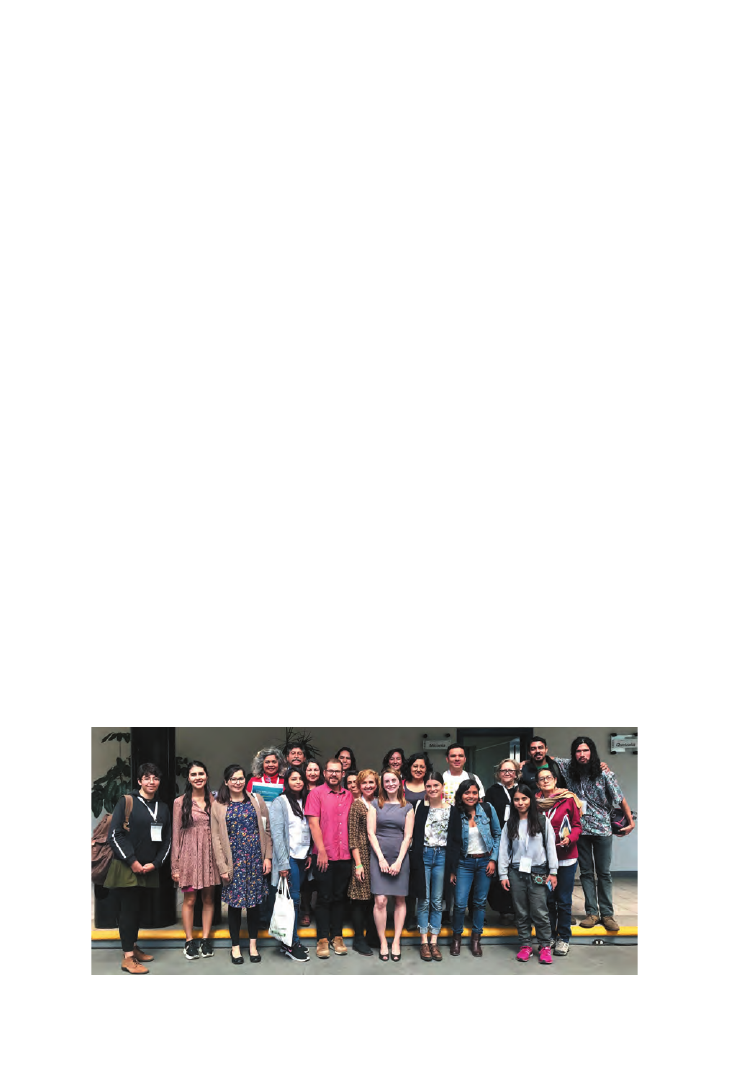
BSA Presents Author Workshop at
the XXI Congreso Mexicano de
Bot
á
nica in Aguascalientes, Mexico
Marcelo Pace, AJB Managing Editor Amy McPherson, and Wiley Representative Gillian Gre-
enough [front row center] led the author workshop at XXI Congreso Mexicano de Botánica.
PSB 65 (3) 2019
147
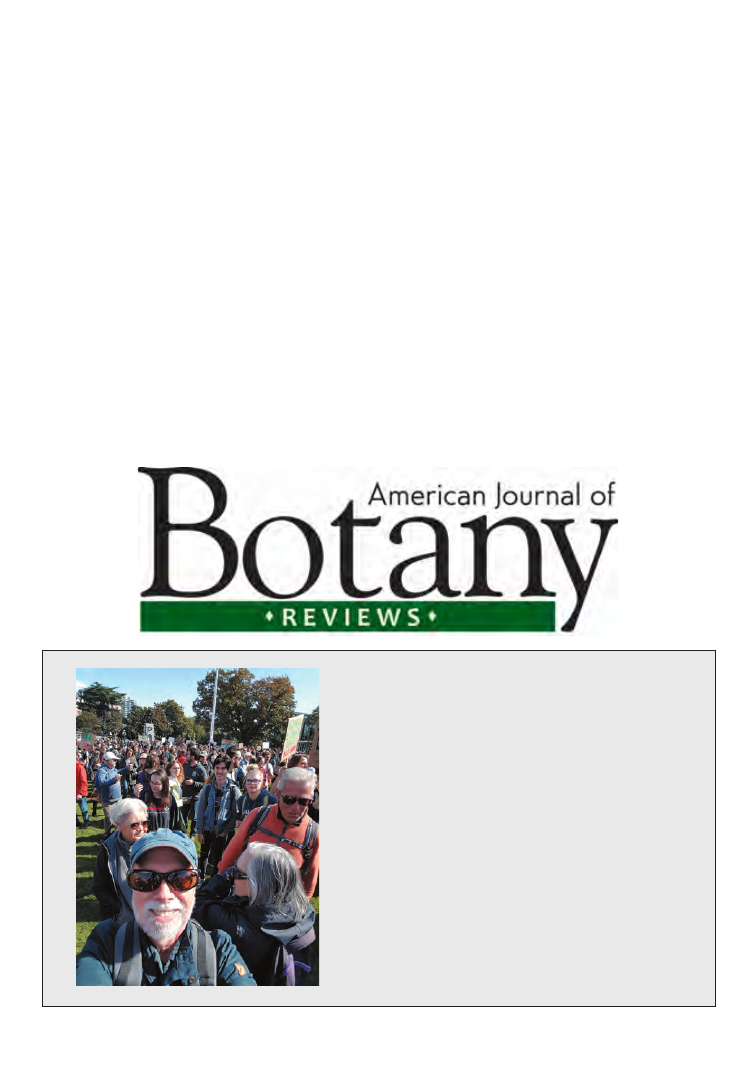
BSA MEMBERS
PARTICIPATE IN
2019 CLIMATE STRIKE
The 2019 Climate Strike attracted BSA members
from around the globe. Here, Dr. David Ehret
participated in the Climate Strike in Victoria, BC,
Canada. “I thought it was important to add my
voice to the chorus of others demanding climate
action,” Ehret said. “I was most impressed by all
the millennials and Gen Z’ers at the protest. It was
so inspiring to see such passion and commitment
among the young.”
New
AJB Reviews
feature
coming in 2020
AJB Reviews is set to launch in 2020! These reviews will expand the coverage and reach of the
journal by providing timely syntheses of major issues, and new insights or perspectives to guide
future research.
AJB Reviews, headed by Drs. Jannice Friedman, Emily Sessa, and Pamela Diggle, place topics
in context while being forward-thinking and insightful. They can develop new hypotheses and
propose general models that help move the field forward. Original interdisciplinary syntheses
and articles that cover newly emerging fields are welcomed. Authors can express a personal
perspective while maintaining a balanced view of the field.
Anyone interested in submitting to AJB Reviews should provide a preliminary summary of
up to 250 words. A decision on whether to invite a full review rests with the Editorial Board.
All contributions will be fully peer-reviewed, in line with other AJB manuscripts. For more
information, go to https://bit.ly/2LvM1BE or e-mail the Reviews Editor at reviews@botany.org.
PSB 65 (3) 2019
148
The BSA was pleased to announce its annual
award winners in the last issue of the Plant
Science Bulletin. We now present the rest of
the awards available at press time.
CONGRATULATIONS TO
2019 BESSEY AWARD WINNER
SUZANNE KOPTUR!
This year the BSA recognized Dr. Suzanne
Koptur, Professor at Florida International
University, with the Charles Edwin Bessey
Teaching Award. This award recognizes
outstanding contributions made to botanical
instruction and celebrates individuals
whose work has improved the quality of
botanical education at a regional, national, or
international level. The Bessey Award is the
highest honor for Teaching and Educational
Outreach given by the Botanical Society of
America.
Suzanne has been an active member of the
BSA since graduate school. She has presented
over 40 papers at BSA conferences over the
years, both ecological and educational, and
is a member of the Teaching, Ecology, and
Tropical Biology sections.
Suzanne is a clear fit with the qualities
recognized by the Charles Edwin Bessey
Teaching Award. During her career she has
mentored an exceptional number of graduate
and undergraduate students, including
many from groups under-represented in the
sciences. She actively seeks funding to provide
early opportunities for her students, providing
opportunities for undergraduate researchers
to join her and her graduate students in the
lab and field, supporting and encouraging
them to attend and present at botanical
meetings, and to be involved in the PLANTS
mentoring program and other career-building
opportunities. In 2017 she was awarded the
FIU University Graduate Student Provost
Award for Mentorship of Graduate Students
recognizing her mentoring efforts. One of
her former students writes: “Through her
vocation to training the next generation of
botanists, she has left a lasting legacy. Every
one of us that has had the great fortune in
having Suzanne as a teacher will go forth as
emissaries for science, creating a ripple effect
that will spread her passion for plants far and
wide throughout the world.”
Botanical Society of America’s
Award Winners
(Part 2)

PSB 65 (3) 2019
149
Suzanne is an active and engaged teacher who
embraces new teaching techniques like active
learning, flipped courses, and online teaching.
She was active in creating a new FIU initiative,
Quantifying Biology in the Classroom (QBIC),
to help biology students develop quantitative
skills to help them succeed. She served as the
QBIC director from 2012-2016, and continues
to serve this program as co-director. She
contributes to the research on teaching and
has made great impact in developing and
supporting a culture of teaching innovation
within her department.
In addition to her work at FIU, she is active
in community outreach. She has been a
supporter and proponent of Fairchild Tropical
Botanic Garden’s Connect to Protect program
encouraging citizens and schools to help create
habitat corridors between the endangered
South Florida Pine Rocklands.
She has worked with local schools to
build butterfly gardens, organizes several
conferences that bring researchers and natural
resource management professionals together,
and serves on county committees to develop
conservation initiatives.
The Bessey Award is given annually in honor
of one of the great developers of botanical
education, Dr. Charles Edwin Bessey. Dr.
Bessey served first as professor of botany and
horticulture, and later as dean at the University
of Nebraska.
His work and dedication to
improving the educational aspects of Botany
are most noted in what Nebraskans call
“The Bessey Era” (1886-1915), during which
Nebraska developed an extraordinary program
in botany and ranked among the top five
schools in the United States for the number of its
undergraduates who became famous botanists.
Past Bessey award winners include: Lena
Struwe, J. Phil Gibson, Bruce K. Kirchoff,
Shona Ellis, Paul H. Williams, Les Hickock
and Thomas R. Warne, Susan Singer, Geoff
Burrows, Chris Martine, Roger Hangarter,
Beverly Brown, Michael Pollan, Thomas
Rost, James Wandersee, W. Hardy Eshbaugh,
David W. Lee, Donald Kaplan, Joseph
Novak, William Jensen, Joseph E. Armstrong,
Marshall D. Sundberg, Gordon Uno, Barbara
W. Saigo and Roy H. Saigo, and Samuel Noel
Postlethwait.
BSA CORRESPONDING MEMBERS AWARD
Corresponding members are distinguished senior scientists who have made outstanding
contributions to plant science and who live and work outside of the United States of America.
Corresponding members are nominated by the Council, which reviews recommendations and
credentials submitted by members, and elected by the membership at the annual BSA business
meeting. Corresponding members have all the privileges of lifetime members.
Dr. Richard Abbott, University of St Andrews, London, United Kingdom
Dr. Lucia Lohmann, Universidade de São Paulo (USP), Sao Paulo, Brazil
Dr. Jefferson Prado, Instituto de Botânica, Herbário, Sao Paulo, Brazil
Dr. Victor Rico-Gray, Universidad Veracruzana, Veracruz Mexico
Dr. Fernando Zuloaga, Instituto de Botánica Darwinion, San Isidro, Argentina

PSB 65 (3) 2019
150
DONALD R. KAPLAN MEMORIAL LECTURE
Dr. John Z. Kiss, University of North Carolina, Greensboro
John’s interest in space biology has led to past spaceflight projects which used microgravity as a
tool to understand the mechanisms of tropistic responses. Currently, his team has been approved
by NASA for several new experiments on the International Space Station to investigate plant
tropisms. His long-term goal is to understand how plants integrate sensory input from multiple
light and gravity perception systems.
MARGARET MENZEL AWARD
(GENETICS SECTION)
The Margaret Menzel Award is presented by the Genetics Section for the outstanding paper
presented in the contributed papers sessions of the annual meetings.
Erika Frangione, University of Toronto Mississauga, for her presentation: Comparative
transcriptomics of repeated reticulate evolution in the genus Cuscuta (Convolvulaceae). Co-
author: Saša Stefanović
EDGAR T. WHERRY AWARD
(PTERIDOLOGICAL SECTION AND
THE AMERICAN FERN SOCIETY)
The Edgar T. Wherry Award is given for the best paper presented during the contributed papers
session of the Pteridological Section. This award is in honor of Dr. Wherry’s many contributions to
the floristics and patterns of evolution in ferns.
Hannah Ranft, Johns Hopkins University, for the presentation: Sometimes it only takes one
to tango: using natural history collections to assess the impact of asexuality in the fern genus
Pteris. Co-authors: Kathryn Picard, Amanda Grusz, Michael Windham, Eric Schuettpelz

PSB 65 (3) 2019
151
THE BSA UNDERGRADUATE STUDENT
RESEARCH AWARDS
The BSA Undergraduate Student Research Awards support undergraduate student research and
are made on the basis of research proposals and letters of recommendation.
Blake Fauskee, The University of Minnesota-Duluth, for the proposal: Could RNA editing
explain phylogenetic rate heterogeneity in seed-free vascular plants?
Brianna Reynolds, The University of Tennesse-Knoxville, for the proposal: Identifying Fungal
Endophytes in a Myrmecochore, Chelidonium majus
Susana Vega, University of Antioquia, Colombia, for the proposal: Taxonomic Revision of the
Genus Selaginella P. Beauv. (Selaginellaceae) in the Department of Antioquia, Columbia.
Paige Wiebe, Kansas State University, for the proposal: Niche divergence in big bluestem grass
ecotypes in response to experimental drought: Mechanisms of local adaptation
Noah Yawn, Auburn University, for the proposal: Reassessment of the Endangered Alabama
Canebrake Pitcher Plant, Sarracenia Alabamensis, Populations and Occurrences in Collaboration
with the Atlanta Botanical Garden
KATHERINE ESAU AWARD
(DEVELOPMENTAL AND STRUCTURAL SECTION)
This award was established in 1985 with a gift from Dr. Esau and is augmented by ongoing
contributions from Section members. It is given to the graduate student who presents the
outstanding paper in developmental and structural botany at the annual meeting.
Joyce Chery, University of California-Berkeley, for the presentation: Evolution of strange
wood development in a large group of neotropical lianas, Paullinia (Sapindaceae). Co-
authors: Marcelo Pace, Pedro Acevedo-Rodriguez, Carl Rothfels, Chelsea Specht

PSB 65 (3) 2019
152
PHYSIOLOGICAL SECTION LI-COR PRIZE
Lauren Tucker and Amanda Salvi tied for the LI-COR Prize for an Oral Paper
Laurent Tucker, California State Polytechnic University, Pomona, for the presentation: Recovery
of California black walnut trees following drought induced dieback. Co-authors: Frank Ewers,
Stephen Davis, Edward Bobich
Amanda Salvi, University of Wisconsin - Madison, for the presentation: Mesophyll
photosynthetic sensitivity to leaf water potential increases in Eucalyptus species native to
moister Australian climates: a new dimension of plant adaptation to drought. Co-authors:
Duncan D. Smith, Kate McCulloh, Thomas Givnish
Steven Augustine and Katie Krogmeier for the LI-COR Prize for Best Poster
Steven Augustine, University of Wisconsin - Madison, for the poster: Going for broke: carbon
and water relations of germinant conifer seedlings exposed to drought. Co-author: Kate
McCulloh
Katie Krogmeier, Appalachian State University, for the poster: Investigating potential impacts
of polyploidy on the ecophysiological responses of Solidago altissma to climate change. Co-
authors: Howard Neufeld, Erica Pauer
PHYSIOLOGICAL SECTION STUDENT
PRESENTATION AWARD
Helen Holmlund, University of California, Santa Cruz, for the Best Oral Presentation: High-
resolution computed tomography reveals dynamics of desiccation and rehydration in a
desiccation-tolerant fern. Co-authors: Brandon Pratt, Anna Jacobsen, Stephen Davis, Jarmila
Pittermann
It's more than just
another scientific
conference!
This year 1200 people from all over the
world came together in Tucson, Arizona
as colleagues, collaborators, students, and
friends of Botany!
Friendships are formed, science is shared,
knowledge is expanded!
It's more than a scientific meeting - it's a
yearly reunion of people with the same
interests and passion for science - with a lot
of fun thrown in!
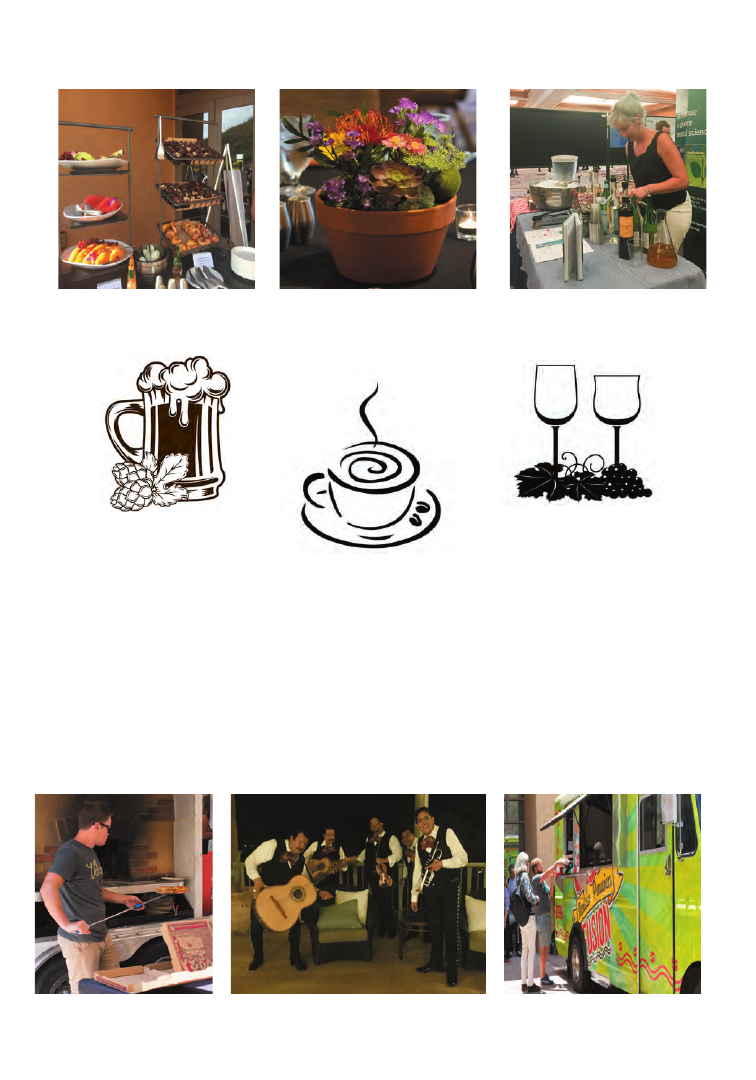
Botany 2019 Beverages by the Numbers
1121 Servings of Craft and Domestic Beer
1227 Glasses of Wine
923 Gallons of Coffee
49 Gallons of Fruited Water
PSB 65 (3) 2019
155
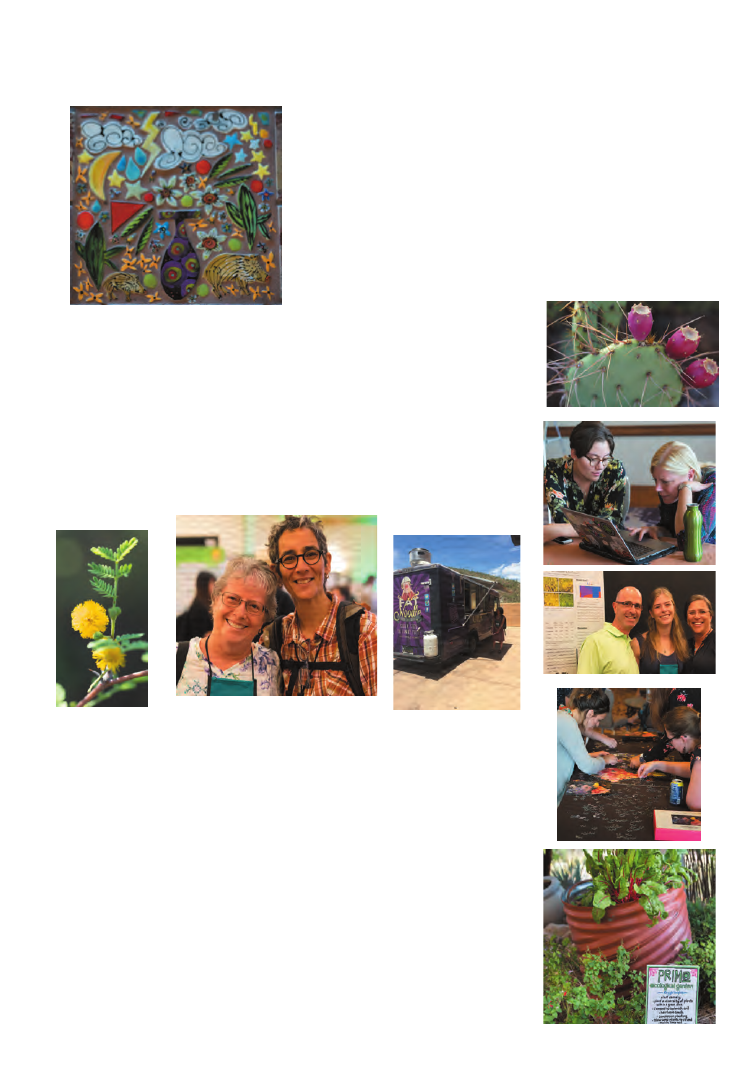
Botany 2019 in your words.....
• I attended the in-service at the Mission Garden. I loved the
experience, and am happy I had the opportunity to participate!
• Crop wild relative conservation field trip is very nice!
• Culture of botany conference is very pleasant and
inviting, contributes to enjoyable experiences speaking
with a wide range of botanically inclined folks.
• I enjoyed the conference, and it was really nice
to be able to go hiking right from the hotel.
• This was one of the best meetings ever. The energy was great.
Personally, I think it is because participants could get outside
easily, and because they could hike so readily. I went out for an
hour or more every morning but one. Those hikes left me high
for the rest of the day.
• It was a stunning setting, which made the stay very pleasant.
• I attended probably the best symposium since I began coming to
BSA...the Land Plant Evolution symposium was outstanding.
• Loved the venue, we should consider going back there in a
few years. You did a good job providing vegan food this time
(usually there are no options, or the options aren't very good).
The student housing rates were adequate enough to encourage
students to attend.
• I think the PLANTS program and travel grants are extremely
valuable. I have participated as a PLANTS mentor for 3 years,
and I plan to continue participating whenever possible.
• It was both scientifically stimulating and lots of fun
• I really enjoy the friendly atmosphere and the chance to see
cool talks and catch up with colleagues!

156
SPECIAL FEATURES
I
f my own childhood is any indication, many
a child has grown up wishing that trees
could talk. In fact, recent events suggest that
it is not just children, but adults too, who wish
this were so. In 2010, the European magazine
Eos launched “The EOS Talking Tree.” They
fitted an urban tree with various sensors
and used these to give the tree emotions and
opinions (Galle, 2016). The tree’s website
was visited over 350,000 times (Galle, 2016).
Shortly after, another public-tree event took
place in Australia (Lafrance, 2015). In 2013, a
government tree-servicing program, intended
to improve tree maintenance in the city of
Melbourne, took an odd turn. When given the
opportunity to use unique tree-codes to e-mail
the city and inform workers of maintenance
needs, citizens instead wrote thousands of
love letters to the city’s trees (Lafrance, 2015).
Then, in the summer of 2018, an agave plant
in the Halifax Public Gardens became a local
celebrity and took the city by storm (Berry,
2019).
These examples point to a human desire
to connect to, and communicate with,
nature. Though novel in Western thought,
communication across different species is
featured in many Indigenous oral traditions
(Legge and Robinson, 2017). Unfortunately,
research suggests that modern people
are more disconnected, both emotionally
and physically, from nature than previous
generations (Barlett, 2008; Vining et al.,
2008). With over 80% of Canada’s population
residing in urban areas (Statistics Canada,
2014), access to and engagement with urban
nature is important now more than ever.
Understanding public values and testing
engagement strategies is, then, vital to urban-
forest management (Ordoñez et al., 2017).
On July 7, 2019, a team of volunteers and
I launched Text-A-Tree: one part public
engagement and one part academic study
(Figs. 1, 2). Text-A-Tree serves as the final
project in my Master’s of Resource and
Environmental Management at Dalhousie
University, under the supervision of Dr. Peter
Duinker. An underlying theory behind the
initiative is that if we want to encourage people
Old Trees Meet New Technology
By Julietta Sorensen Kass
Dalhousie University
e-mail: jl883690@dal.ca
www.halifaxtreeproject.com/textatree
PSB 65 (3) 2019
157
to develop relationships with trees, we should
emulate the way we develop relationships
with each other. For many of us, that now
involves texting. So, from July 7 to August 31,
visitors to the Halifax Public Gardens can text
several trees and receive unique responses
within 24 hours. Participants can also engage
through our social media platforms using
@TextATreeHalifax.
Text-A-Tree hopes to determine whether
texting and social media can be used to
engage people with urban trees. The results of
the study will help inform future engagement
strategies relating to urban forests or urban
nature. As described by Ordóñez et al. (2017),
understanding public values relating to urban
forests can help guide and broaden effective
management. The project will determine the
utility of text-based engagement compared
with Instagram and Facebook engagement,
providing insight into communication
strategies. Analysis of text conversations will
add to the growing research on how Canadians
perceive and value urban forests (Ordóñez et
al., 2016).
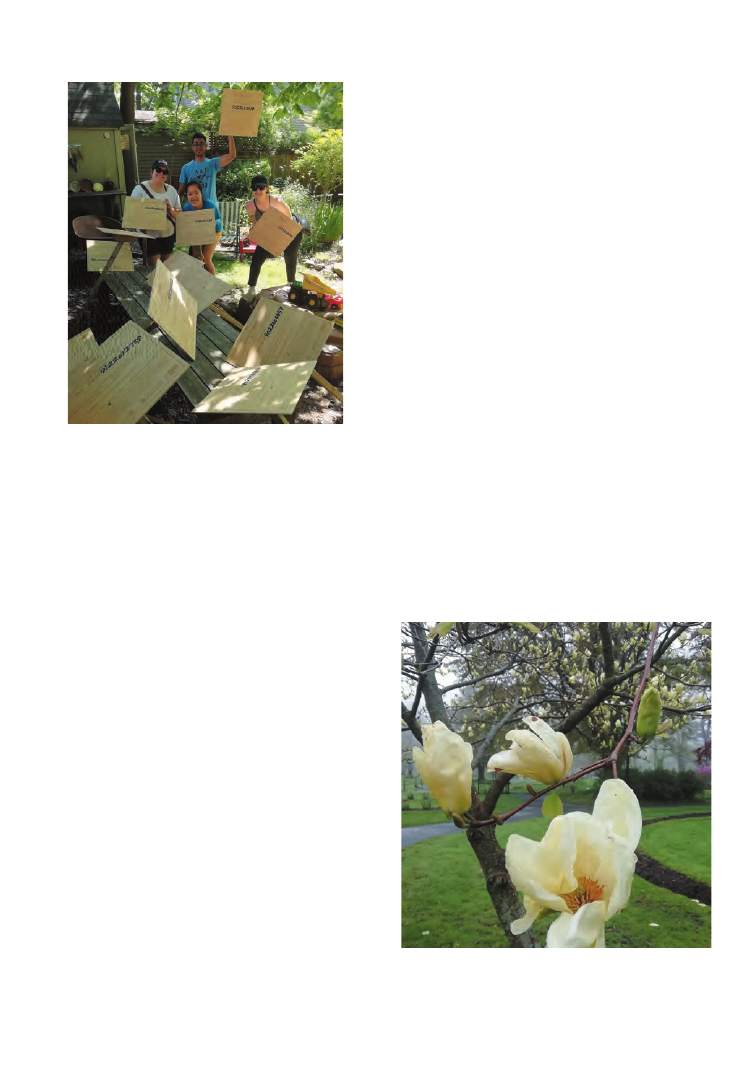
“Texting trees” are denoted by wooden signs
(Figs. 3 and 4). Each sign displays the tree’s
phone number and information regarding the
project, study, and consent. Fourteen trees,
each with their own volunteer tree-speaker
and personality, are spread throughout the
Gardens. There is also a silent Wish Tree,
which people can send their wishes to via text.
Communication is enabled through a cloud-
based system called Zendesk and monitored by
the project head. Each volunteer was provided
with training on the communications system.
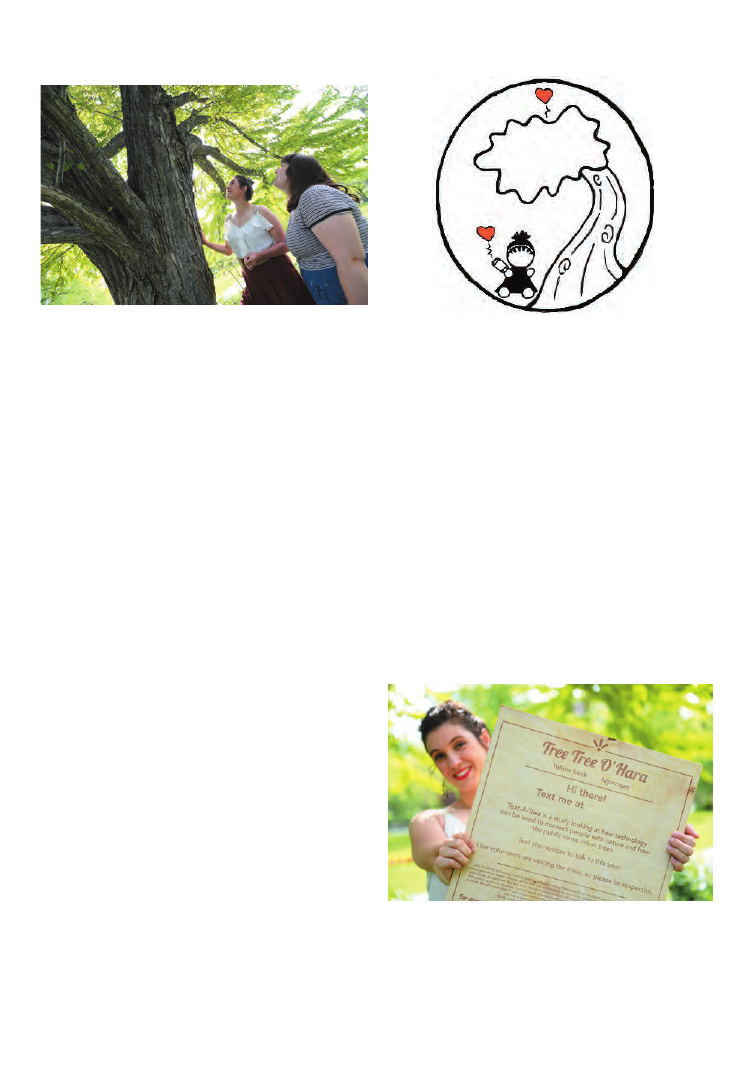
Figure 1. Julietta Sorensen Kass (left) and
Anna Irwin-Borg spent many an hour discuss-
ing logistics and media strategies.
Figure 2. When Text-A-Tree was first conceived,
it was a crazy idea and a few sketches. We wanted
our logo to reflect where the journey began.
Figure 3. The first tree we named was a yellow
birch called Tree Tree O’Hara, named after a
famous drag queen, due to the tree possessing
both male and female flowers.
PSB 65 (3) 2019
158
Volunteers were also briefed on urban forest
research, biological and cultural information
regarding their tree species, and facts
pertaining to their unique tree. Using this
information, volunteers created personalities,
complete with pronouns. The entire process
was designed to help participants in the project
recognize trees as individuals, allowing them
to develop a relationship with trees, and view
them as living members of the community.
Attributing trees with personhood may appear
strange in dominant Western culture, but
such a view has roots across time and space
(Boyer, 1996; Bird-David, 1999; Tam et al.,
2013; Tam, 2014; Legge and Robinson, 2017).
One example with particular significance to
Halifax is that of the Mi’kmaq concept of Msit
No’kmaq (translated to “all my relations”).
In this, animals, plants, and even geographic
locations are recognized as having an identity,
personality, and spirit (Robinson, 2014). These
entities are considered persons, in that they
experience their existence in the first person
(Legge and Robinson, 2017).
Mi’kmaq culture was further incorporated
into the project, with 4 of the 15 trees being
selected due to their cultural significance.
These trees boast both their English and
Mi’kmaq names on their signs and initiate
texts to participants with the word “Kwe,” a
Mi’kmaq greeting meaning “I am here” (T.
Christmas, personal communication, June
2019). Through their conversations with
participants, the volunteers representing
these trees share how trees have contributed
to culture in Nova Scotia.
Both the Halifax Public Gardens and the
City of Halifax itself also have a connection
to Japan, which made Japanese culture
important to incorporate as well. Again,
4 of the 15 trees were selected based on
significance to Japanese culture, and these
trees now greet participants with Kon’nichiwa
(hello!) and share cultural information (Fig.
5). As an additional recognition of Japanese
Figure 4. Volunteers were heavily involved
from the beginning. Here we are preparing all
15 signs for our textable trees at the Halifax
Public Gardens.
Figure 5. An early summer shot of Maggie the
Magnolia, one of our 15 textable trees, and a
nod to Japanese culture.

PSB 65 (3) 2019
159
culture, Text-A-Tree was launched on July
7 to coincide with the Tanabata festival. We
partnered with the Dalhousie Japanese Society
to put on a small celebration, including
Japanese crafts, games, and stories. In keeping
with tradition, members of the public were
invited to wish upon the Wish Tree, although
with their phones rather than the customary
tanzaku (long strips of paper). The Wish Tree
has continued to receive wishes and will do so
throughout the project. Anonymous wishes
are posted daily on Facebook and Instagram
(@TextATreeHalifax).
The emphasis on culture is intended to make
Text-A-Tree accessible to the diverse peoples
living in and visiting Halifax. By celebrating
different cultures, we hope to create a space
for people from any background to participate
and share their values. Previous studies have
engaged in street-side interception surveys,
which, by necessity, capture information
from individuals old enough (over 18) and
comfortable with surveys (e.g., Ordóñez et
al., 2016, 2017). Building on the foundation
of this work, we propose that text messaging
might allow younger participants and those
less comfortable with English, or perhaps
intimidated by the prospect of an interview
with university members, to express their
views as well.
Though proper analysis has just begun in
September 2019, initial engagement seems
promising. One week after the launch of
Text-A-Tree, volunteers had engaged in over
1000 unique conversations from participants.
While some have been clear in voicing why
trees are of value---for example, through
comments on beauty, shade, and health---
others have responded with questions and
have been delighted by the information
provided by our volunteers. The data will
likely reveal more surprises still, but for now,
it seems there is hope that technology may
help people reconnect with urban nature.
ACKNOWLEDGMENTS
This project was made possible thanks to
the support of the Nova Scotia department
of Communities, Culture, and Heritage, the
Suellen Murray Educational Bursary, and The
Friends of the Public Gardens.
LITERATURE CITED
Barlett, P. F., E. N. Anderson, J. C. Boyer, D. Brunck-
horst, T. Princen, and P. B. Barlett. 2008. Reason
and reenchantment in cultural change: Sustainabil-
ity in higher education. Current Anthropology
49(6): 1077-1098.
Berry, S. 2019, Jan 30. Grow your very own Agave
Maria with seed from celebrity plant. CBC News,
Nova Scotia. Retrieved from: https://www.cbc.ca/
news/canada/nova-scotia/grow-agave-maria-seeds-
celebrity-plant-public-gardens-1.4998366.
Bird-David, N. 1999. “Animism” revisited: person-
hood, environment, and relational epistemology. Cur-
rent Anthropology 40(S1): S67-S91.
Boyer, P. 1996. What makes anthropomorphism natu-
ral: Intuitive ontology and cultural representations.
Journal of the Royal Anthropological Institute 2(1): 83-
97.
Galle, T. 2016, Aug 8. Talking tree case video. [Video
file]. Retrieved from:
https://www.youtube.com/
watch?v=jMcV0OHBa18.
Lafrance, A. 2015, July 10. When you give a tree an
email address. The Atlantic. Retrieved from: https://
www.theatlantic.com/technology/archive/2015/07/
when-you-give-a-tree-an-email-address/398210/.
Legge, M., and M. Robinson. 2017. Animals in In-
digenous spiritualities: Implications for critical social
work. Journal of Indigenous Social Development 6(1):
1-20.

PSB 65 (3) 2019
160
Ordóñez, C., T. Beckley, P. N. Duinker, and A. J. Sin-
clair. 2017. Public values associated with urban for-
ests: Synthesis of findings and lessons learned from
emerging methods and cross-cultural case studies. Ur-
ban Forestry & Urban Greening 25: 74-84.
Ordóñez, C., P. N. Duinker, A. J. Sinclair, T. Beckley,
and J. Diduck. 2016. Determining public values
of urban forests using a sidewalk interception survey in
Fredericton, Halifax, and Winnipeg, Canada. Arbori-
culture & Urban Forestry 42(1): 46-57.
Robinson, M. 2014. Animal personhood in Mi’kmaq
perspective. Societies (4.4): 672-688.
Statistics Canada. 2014. Canada’s rural population de-
clining since 1851. Canadian Demography at a Glance.
Catalogue No. 98-003-X. Retrieved from: https://
www150.statcan.gc.ca/n1/pub/11-630-x/11-630-
x2015004-eng.htm.
Tam, K. P. 2014. Anthropomorphism of nature and ef-
ficacy in coping with the environmental crisis. Social
Cognition 32(3): 276-296.
Tam, K. P., S. L. Lee, and M. M. Chao. 2013. Saving
Mr. Nature: Anthropomorphism enhances connected-
ness to and protectiveness toward nature. Journal of
Experimental Social Psychology 49(3): 514-521.
Vining, J., M. S. Merrick, and E. A. Price. 2008. Hu-
man perceptions of connectedness to nature and ele-
ments of the natural and unnatural. Human Ecology
Review 15(1): 1–11.
FROM THE
PSB
ARCHIVES
60 years ago: “A survey has been made of what bacteriology teaching and research assistants were being
paid at 34 colleges and universities during the year 1958-59 [. . .]
For teaching assistants the number of hours of work per week ranges from 8 to 22 with most places re-
quiring 15 to 20. Just half of the institutions use teaching assistants for 9 months. About half of the remainder
have 10 months appointments, the rest 12 months. There is great variation in the number of hours of graduate
work that assistants are allowed to carry, but an estimate would be that two courses through the year is what
the figures mean. Fifteen institutions charge teaching assistants no fees. In the others, particularly those with
charges for out-of-state students, fees may run as high as $400 for the academic year (and these institutions do
not necessarily have the highest stipends for teaching assistants). [. . . ]
The stipends for Teaching Assistantships for 9 months run from under $1000 (2 institutions) to just over
$2000 (1 institution).
- Creighton, Harriot B. “ASSISTANTS’ SALARIES 1958-59” PSB 5(5): 7
[Editor’s Note: Online inflation calculators (e.g. Calculator.net) indicate that this would be approximately
$8,700 to $17,500 in 2019 dollars.]
50 years ago: “Dr. Charles Heimsch, retiring Editor of the American Journal of Botany, presented a report
on the current status of the Journal and a summary of certain aspects of the Journal operation during his 5-year
tenure as Editor.” In 1969, 153 manuscripts were published and 28 were rejected.
- Starr, Richard C. “Minutes of the Business Meeting” PSB 15(4): 7

PSB 65 (3) 2019
161
N
ature study, as we have come to
understand it in the 21st century, is an
umbrella term used to encompass education
about our environmental world. It is a course
of biological study that introduces the curious
student to introductory levels of botany,
zoology, entomology, and the study of other
living systems. Nature study may be the
initiation of an educator’s enthusiasm, in any
of these disciplines, to raise his or her students'
curiosity.
Here, I seek to tell the story of a collective
group of nature educators, with a predilection
toward botany, who were inspired and
influenced by Cornell University nature study
educator, Anna Botsford Comstock, and her
husband John Henry Comstock, entomologist
and educator, at the turn of the 20th century.
The three notable educators—Liberty Hyde
Bailey, Anna Botsford Comstock, and John
Walton Spencer (Fig. 1)—mentored four
young women to seek their own paths
and establish their botanical legacy. (It is
noteworthy that Bailey was an early member
Inspirational Voices in
Early Botanical Education
and past-president of the BSA.) The stories,
or at least the botanical marks, of Alice
Gertrude McCloskey, sisters Julia Rogers and
Mary Rogers Miller, and Ada Eljiva Georgia
are preserved in Mrs. Comstock’s original
unpublished autobiographical manuscript.
The 1953 autobiography, The Comstocks of
Cornell, was drastically altered when Mrs.
Comstock’s manuscript was culled in the
years following both Comstocks’ death by
several Cornell personalities who sought
to elevate Prof. John Henry Comstock’s
entomological legacy (St. Clair, 2017) at
the expense of Anna B. Comstock’s own
legacy. The collective botanical and nature
study work of this group of seven educators
overlapped in their individual projects and
through collective ventures. Following their
stories is a bit convoluted, yet astonishing in
the closeness of their connection. Here I hope
to bring their stories back into the light, and
to recognize them for their contributions, as
Anna B. Comstock intended.
By Karen Penders St. Clair
School of Integrative Plant Science, Plant
Biology Section, Cornell University, Ithaca,
NY 14853
E-mail: aka27@cornell.edu
Figure 1. John Walton Spencer, Anna Bots-
ford Comstock, and Liberty Hyde Bailey circa
1904.

PSB 65 (3) 2019
162
LIBERTY HYDE BAILEY,
ANNA BOTSFORD
COMSTOCK, AND
JOHN WALTON SPENCER
Anna B. Comstock began her career at
Cornell University in the late 19th century, in
collaboration with the entomological research
of her husband, John Henry Comstock, and
spread collaterally when she partnered with
the agrarian zeal of Bailey. The scope of
Bailey’s work is an article unto itself. For our
purposes here, it will suffice to say that Bailey
came to Cornell in 1888 as Chair of Practical
and Experimental Horticulture. His work
in nature education and outreach, during
the early 20
th
century, came at the heels of
an accomplished botany and horticulture
education, including a two-year herbarium
assistantship to the distinguished botanist,
Asa Gray, at Harvard University (Lawrence,
1955). Bailey wrote six botany textbooks
between 1898 and 1909; however, one of his
first books, Talks Afield (1885), was a botany
book written for the farmer and non-scientist.
Bailey founded the College of Agriculture at
Cornell, and served as the dean of the New
York State College of Agriculture from 1903
until his retirement from the University in
1913 (Lawrence, 1955).
The ink of the Nixon Act of 1896, which
allowed funding for extension courses in
horticulture, had barely dried as Bailey and
Anna B. Comstock traveled by horse and
buggy visiting rural schools of New York
State (Anna B. Comstock, unpublished).
In meeting with teachers in Cattaraugus
County, New York, they discovered John
Walton Spencer in Westfield, New York, and
believed him to be a man who seemed to
have the qualities needed to develop further
work on the Nature Study
program (Palmer,
1944). Spencer came to Cornell University
on a voluntary basis in 1896, at the behest
of Bailey. The Nature Study movement from
Cornell took off like a firestorm around the
country upon Spencer’s inclusion. Letters
from superintendents around the country
proclaimed enthusiastically to procure from
Spencer every copy of the Nature Study
circular letter for all their teachers (Spencer,
1898). This circular was developed by Spencer
while at Cornell University.
Spencer was passionate about his work in
Nature Study and lectured around New York
State in various schools of local townships.
He wrote about several topics regarding
Nature Study, and particularly with plant-
based lessons such as The Apprentice Class
in Gardening out of door work; Elementary
Gardens out of doors; Sowing a Seed; Plant
Life; Soils; Autobiography of a Corn Stalk;
Fall Planting for Outdoor Growth; Plants
that prepare lunches for their offspring; Seed
dispersal; Perennials for the School Ground; A
Bulb Garden; and How to Help Plants Grow
(Spencer, 1898).
In addition to impact among adults, Spencer’s
essays and circulars were important for
promoting gardening and nature study
among the youth. In his essay What is Nature-
Study?, Bailey stated that Spencer was largely
responsible for the fruition of the children’s
garden movement in New York largely due to
his efforts to put children in touch with nature
in their daily lives through the development of
Junior Naturalist Programs. This program was
a subscription-based incentive for teachers
and students to get pamphlets and information
about nature studies. It is here where we are
first introduced to Alice Gertrude McCloskey,
who, with Spencer, organized Junior Naturalist
Clubs with the idea of organizing children

PSB 65 (3) 2019
163
into clubs for the study of plants and animals,
and other outdoor subjects (Bailey, 1897).
ALICE GERTRUDE
MCCLOSKEY
John Spencer first met Alice Gertrude
McCloskey in Saratoga Springs, NY during
his travels around the state for his Junior
Naturalist Programs. She had so impressed
Spencer with her work in nature education in
the schools that he recruited her to come to
Cornell University to assist in answering the
inquiries that were coming in from his junior
naturalists. McCloskey came to Cornell in the
fall of 1899 and was appointed an Assistant in
Nature Study (Cornell Alumnae Club, 1915).
At the instigation of Bailey, Spencer, with
McCloskey, encouraged Cornell agricultural
faculty to write to children in the country in
an effort to build comradery between farm
families and the University. McCloskey was
the one “who first used the phrase” Cornell
Rural School Leaflet (quote from Palmer,
1944).
In an unpublished account from July 1900,
during a summer session at Chautauqua
Institute for Nature Study teaching, Anna B.
Comstock observed, “Mr. John Spencer and
Alice McCloskey were also there for the Junior
Naturalist and gardening work. I saw Mr.
Spencer give a practical lesson in gardening
to kindergarten children and I marveled at
this success and his charm for the little folk.”
(Anna B. Comstock, unpublished).
Overlapping this work, from 1899 to 1904,
McCloskey was co-editor of the Junior
Naturalist Monthly with Comstock, and
worked with Spencer on developing and
implementing lessons (Anna B. Comstock,
unpublished Chapter 10, p. 18). McCloskey,
Anna B. Comstock, Rogers, and Spencer also
collaborated on the Cornell Reading-Course
for Farmers as part of their extension work. At
the time a group of 20 people represented the
New York Experiment Station and University
Extension Staff. In 1900, members of this
staff were already working together on the
Home Nature-Study Course as part of the
Cornell Reading-Course for Farmers (Cornell
University, 1902 [Cornell Ag Exp St, 1894-
1911]).
The Reading-Courses were precursors to
the Cornell Nature-Study Leaflets, which
were later distributed by Bailey. McCloskey
contributed 20 of the 30 leaflets written for
children with Bailey, Anna B. Comstock,
Spencer, and others covering the remaining
10. The individual educational leaflets were
succinct and guided the educator through
basic methods of instruction and encouraged
observation by the child. Half of the 30
children’s leaflets are botanically focused.
McCloskey wrote half of these botanical
modules herself, which included Maple Trees
in Autumn (1903), A Corn Stalk (1903), In the
Corn Fields (1903), Jack-in-the-Pulpit (1903),
Twigs in Later Winter (1904), Pruning (1904),
The Hepatica (1904), and Dandelion [with
Bailey] (1904) (New York State Department
of Agriculture, 1904).
MARTHA VAN RENSSELAER
AND
THE BOYS AND GIRLS
LEGACY
The Comstock-Bailey association was the
synergistic catalyst that also pulled Martha
Van Rensselaer to Cornell. Recruited by
PSB 65 (3) 2019
164
Bailey, at the request of Anna B. Comstock,
to come help organize a reading course for
farmers’ wives, Van Rensselaer was a New
York State native in her third term as School
Commissioner for Cattaraugus County. She
already had early contact with Spencer, asking
for circulars to distribute at a forthcoming
meeting of the Teacher’s Association (Fig.
2). Van Rensselaer held such a staunch
commitment to the Cornell nature and rural
education programs that she wrote Spencer of
her readiness to answer the call to come help
(Spencer, 1897-1912, Box 2).
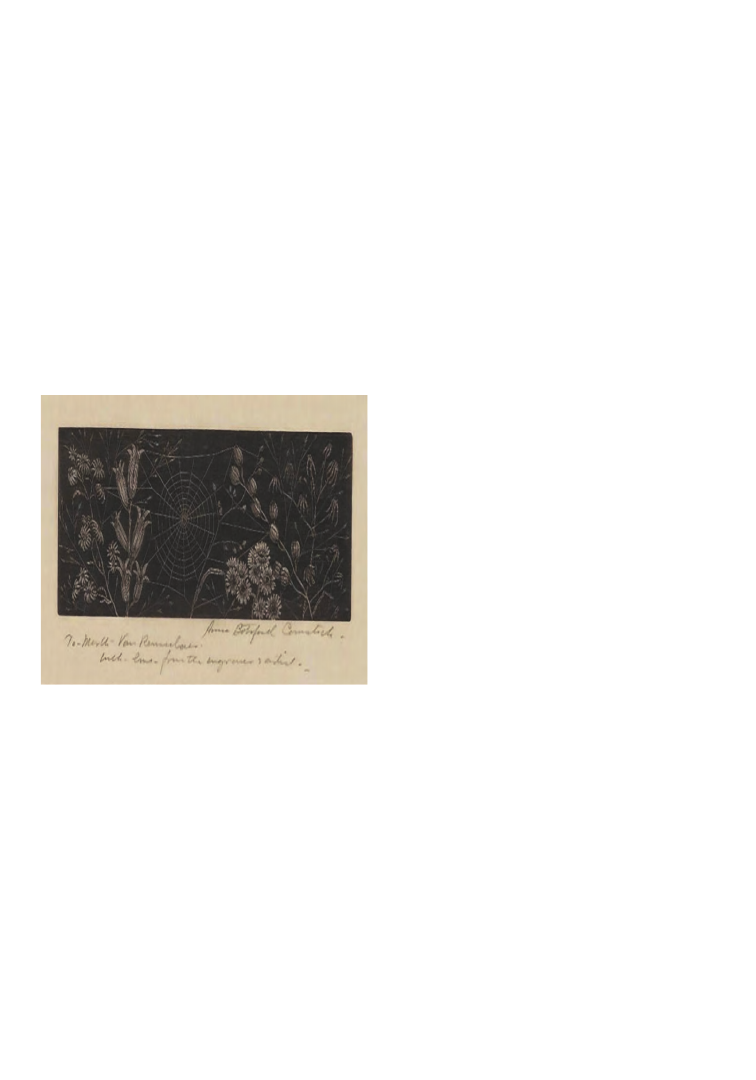
Figure 2.
An etching gifted to Martha Van
Rennselaer by Anna B. Comstock (“To Mar-
tha Van Rennselaer – with love – from the en-
graver & artist-”).
Under Spencer, part of the reorganization of
educational efforts in 1902 included Anna
B. Comstock and Van Rensselaer with their
collective venture of the Boys and Girls
magazine. It is at this point that McCloskey
returned to her classes at the University,
although she also contributed eight articles
to Boys and Girls magazine, on other nature
topics, until it ceased publication in 1907.
Anna B. Comstock, Spencer, and Van
Rensselaer’s early nature writing, through their
joint publication of Boys and Girls, maintained
their educational base in nature study at
Cornell. This annual publication served as
a platform for botanists, horticulturalists,
zoologists, and agricultural specialists to
interact with parents, teachers, and children
in distant communities. The Boys and Girls
nature magazine was not only an important
source to reach children outside of New York
State, but also served as a stepping stone
of publication for young women under the
direct influence of both Spencer and Anna B.
Comstock. First published in 1901, Boys and
Girls was the brain-child of Van Rensselaer in
conjunction with Spencer (Percival, 1956). At
the beginning of her auspicious career, Van
Rensselaer, already acquainted with Spencer
from her early Commissioner days, approached
him with the idea of producing a publication
about garden, home, and nature education.
Anna B. Comstock, in turn, was approached
by Spencer with a proposal to join as editor,
adding not only her own stories and artwork,
but the “Comstock” name to the venture.
Unlike the Home-Nature Study Course, under
the general direction of Mary Rogers Miller
(see below), running concurrently at the time,
the idea for the Boys and Girls publication was
one that would interact directly with children.
Building on the “Uncle John” precedent of the
Junior Naturalist Clubs, the goal of this new
format would be to endeavor to reach children
beyond New York State.
The little magazine was published for five
years with Van Rensselaer taking over as
editor in 1903 as Anna B. Comstock shifted
her energies to the Home Nature Study
Course leaflets at Miller’s resignation (Anna
B. Comstock, 1907).
1
Comstock maintained
her influence on Boys and Girls not only with

PSB 65 (3) 2019
165
her own submissions, but also as a direct
channel for other young women to have a
means to have their own writing published.
McCloskey,
2
Miller (
“Woodland Flowers
in Spring,” Boys and Girls, April 1904)
, and
Julia Rogers (
“A Winter Landscape,” Boys and
Girls, February 1904)
all submitted articles
and essays to Boys and Girls, contributing to
nature study education movement into the
early 20th century.
MARY FARRAND ROGERS
MILLER
Mary Farrand Rogers Miller was the younger
of the two Rogers sisters who held a lifelong
relationship with the Comstocks (Fig. 3).
Miller was born and raised on a farm in Dallas
County, Iowa in the mid-1860s. Her strong
roots in rural life gelled compatibly with the
surging nature study education movement of
the time. Miller taught in rural, village, and
city schools both in Iowa and Minnesota from
the age of 17 (Cornell Alumnae, 1909). Miller
came to Cornell University in 1893, choosing
to “study the facts of life in biology laboratory
with men and women working together
matter-of-factly” (Miller, 1954). Miller met
John Comstock almost immediately at the
beginning of the Spring 1893 session at Sage
Hall, where Miller lived and Comstock took
his meals when his wife traveled (Anna B.
Comstock, unpublished Chapter 9, pp. 14–
15). An excellent student, Miller became
determined by the following spring of 1894
to study entomology. She and her colleagues
kept the professor on his toes as he met the
demand for his growing department in what
was the largest ever registered for the third
term in entomology (Anna B. Comstock,
unpublished Chapter 9, pp. 25-26). In 1896, her
senior year at Cornell, Miller was appointed
to the position of laboratory assistant in the
department of entomology and continued in
the capacity of an instructor for the summer
term.
In the following fall of 1896, winds of change
began to blow for the College of Agriculture
at Cornell. As stated previously, it was in this
year that the Ways and Means Committee of
the New York State Legislature appropriated
funds to Cornell University to expand the
nature study education initiative at the College
of Agriculture. This appropriation was an
expansion from the 1894 establishment of
extension courses in horticulture with
Cornell teachers in Chautauqua County of
New York (Anna B. Comstock, 1953; Anna
B. Comstock, unpublished, Chapter 10, p. 3).
The Bureau of Nature Study began an issuance
of leaflets immediately in December 1896.
The early leaflets were known as the Teacher
Leaflets with both Anna B. Comstock and
Miller contributing articles accordingly. The
Teacher Institute leaflets that Miller oversaw
reached 30,000 teachers (Palmer, 1944).
In 1897, Miller was appointed Lecturer in
Nature Study as Cornell began its extension
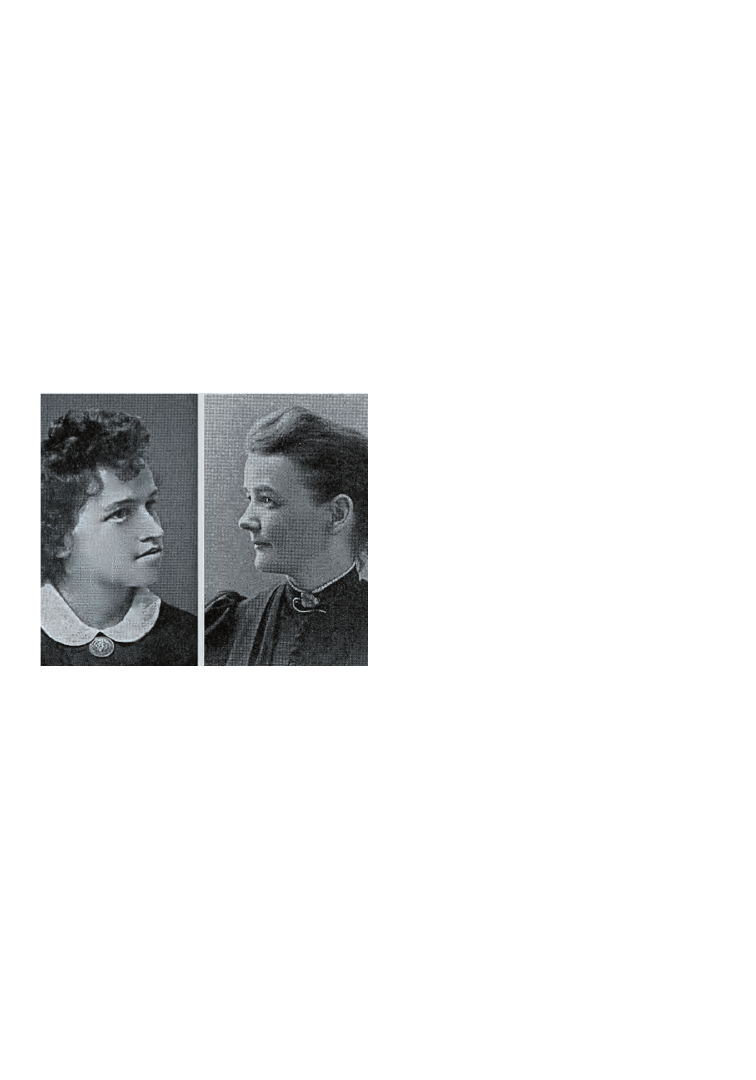
Figure 3. Mary Farrand Rogers Miller (Cor-
nell Alumni News, 1909) and Julia Ellen Rog-
ers (Class of 1892, University of Iowa).

PSB 65 (3) 2019
166
work in the College of Agriculture, and for a
brief time commanded a higher salary than
Anna B. Comstock herself (Kohlstedt, 2005).
3
It was a position that Miller held for six years
during which
time she also taught at Cornell
Summer School with the rank of Instructor.
Miller also appeared on the programs of the
National Education Association of the New
York State Science Association, and of the
American Association for the Advancement
of Science (Cornell Alumnae, 1909). Miller’s
relationship with Anna B. Comstock
intertwined as they both taught nature study
at the State Normal School at Chautauqua,
and she, along with her sister, Julia, lived with
Anna B. Comstock during these summers
away from Ithaca. The Rogers sisters were not
just any students with a marginal relationship
to the Comstocks; they formed an important
part of the Comstock household (Comstock,
unpublished Chapter 10, pp. 10, 17, 23).
Miller’s name appeared at the onset of the
project as the Nature Study educator as part of
the organization of the Station and University
Extension Staff. She contributed annually to
the Teacher Leaflets until their publication
ceased in 1901 (
New York State Dept. of
Agriculture, 1904
). With the cessation of one
project, Miller was free to complete another.
Her book, The Brook Book: A First Acquaintance
with the Brook and its Inhabitants Through the
Changing Year, was first published in 1901.
Dedicated to “John Henry Comstock”
4
, the
book is expressive with its execution of a prose
of deep reflection and introspection. Miller
wrote in a semi-autobiographical format,
as her unnamed protagonist hiked through
wooded wetlands with “the Professor.” Her
writing anthropomorphized the brook with
the courses of a human life. The wife of
Cornell horticulturist, William (Wilhelm)
Tyler Miller,
5
Miller’s The Brook Book has
an appeal to the botanist, entomologist, and
naturalist alike as the chapters alternately
weave each discipline in concert with each
other. The symbiotic relationship of plant,
insect, and animal in this slim volume is a
treasure.
The termination of the Teacher Leaflets
program in 1901 was more of a hiatus than
an end-point for the educators involved
with its writing. Each educator evolved their
direction, guided by the demands of the
teachers for whom they wrote their nature-
education modules. The nature study work at
Cornell continued with Liberty Hyde Bailey
appointing Miller as the general director of
the Home Nature Study course in 1902 as well
as assistant editor of the magazine Country
Life in America (a position she maintained
through October 1909) (
Cornell Alumnae,
1909).
Miller contributed several articles to
the Home Nature study course, but her tenure
was short-lived as her husband’s career pulled
the couple in a new direction, away from
Ithaca, New York in 1903.
6
For several years
before her death, at age 103, in 1971, Miller
was noted as the oldest living Cornell alumna
(Edward D. Cobb, personal communication).
JULIA ELLEN ROGERS
Little is known of Julia Ellen Rogers, the
older of the two sisters, whom the Comstocks
took to their hearts. At the end of the 19th
century, Julia was known as a prominent
nature study educator in the state of Iowa.
Her collaboration with members of the Iowa
Agricultural College was part of the nature
study education movement being introduced
in the west as well as an early attempt to
compile seven nature study lessons in booklet
form for classroom teachers. Her contribution

PSB 65 (3) 2019
167
of “A Nature Study Lesson on the Grasshopper”
to the Iowa-based booklet hints to the
collaboration that lay a decade in her future.
7
Scant documentation exists to indicate
exact dates of Rogers’ migration east. The
pull eastward may have been great with the
prospects of a college education influenced by
Julia’s younger sister, Mary (Farrand) Rogers
Miller, and her senior thesis work with John
H. Comstock. The notoriety of both the
Comstocks’ work in nature study education,
particularly of Anna B. Comstock, would have
been known to Rogers as well and may have
been an incentive to come to Cornell.
Rogers enrolled in Cornell in 1900 and
worked closely with John H. Comstock on her
master’s thesis of Materials for Winter Work
in Nature-study (1902) (Rogers, 1902; Cornell
University, 1908). In what is one of the few
existing documents to reflect Rogers’ voice,
the introductory remarks of her thesis speak
directly toward the influence and importance
of the Nature Study Program lauded by Anna
B. Comstock at that time. She emulated
Anna B. Comstock both with positive and
encouraging paragraphs about the importance
of the thoughts of a child’s own observations,
and of the knowledge such observation incurs.
Rogers with her sister Mary Miller were
considered members of the Comstock
household. Both young women traveled with
Anna B. Comstock to southern New York
State for the summer nature study lectures at
Chautauqua Institute. Julia would stay with
Anna B. Comstock when John H. Comstock
would travel for his work (Anna B. Comstock
unpublished, Chapter 10, p. 23). A self-
described publisher, Rogers was a prodigious
writer; her article, “Boys & girls, as naturalists,
gardeners, home-makers, citizens,” contributed
to Boys & Girls: A Nature Study Magazine, was
to be the first of several articles and books that
Rogers was to write in her career (Comstock,
1907).
Rogers’ entomological beginnings
took a decidedly botanical turn with seven of
her ten publications following her botanical
interest. These include:
• Among Green Trees: A Guide to Pleasant
and Profitable Acquaintance with Familiar
Trees (1902; A. W. Mumford: Chicago);
• Tree Book: A Popular Guide to a Knowl-
edge of the Trees of North America and to
Their Uses and Cultivation by Julia Ellen
Rogers (1905; Doubleday, Page & Com-
pany: New York);
• Book of Useful Plants by Julia Ellen
Rogers. Illustrated by Thirty-One Pages
of Half-Tones from Photographs (1913;
Doubleday, Page & Company: New York);
• Useful Plants Every Child Should Know
(1913; Doubleday, Page & Company:
New York);
• Tree Guide: Trees East of the Rockies by
Julia Ellen Rogers (1916; Doubleday, Page
& Company: New York);
• Canadian Trees Worth Knowing (1917;
The Musson Book Co.: Toronto);
• Trees Worth Knowing (1917; Doubleday,
Page & Company: New York);
• Trees (1926; Doubleday, Page & Com-
pany: New York).
Little more is known of Julia Rogers save for
her writing. It is known that Rogers eventually
settled in later life, first in New Jersey, near
her sister Mary, and then in California where
her interest turned to seashells and their
identification (Cornell University, 1908).
After her death in 1958, Rogers’ remains were
interred in her home state of Iowa.
PSB 65 (3) 2019
168
ADA ELJIVA GEORGIA
Ada Eljiva Georgia came to Ithaca, NY, to join
John Spencer as his assistant in the early days
of nature study education in 1896 (Fig. 4).
Spencer discovered Georgia as a teacher in the
city schools of Elmira, New York, engaged in
nature study work with her classes (New York
State College of Agriculture, 1921). Little is
known about Georgia’s background up until
this time; however, her affiliation with Cornell
University was through nature study initiatives
she worked on in collaboration with Anna B.
Comstock and others.
Figure 4. Alice Gertrude McCloskey and
Ada Eljiva Georgia
(Images from Cornell Nature Study Leaflets,
Fall 1956, Vol. 50, No.1.)
Georgia joined Anna B. Comstock in
producing the Home Nature Study Course
leaflets in 1906 when she was transferred to
Anna B. Comstock’s office. With her, Georgia
brought a sound knowledge of plants that
added tremendously to the writing of the
leaflets and assisted in the answering of letters
that Anna B. Comstock had been diligently
working on alone, in the three years before the
arrival of both Spencer and Georgia. Georgia’s
memory was vast, her interests many, and her
love of literature provided many of the literary
references to Anna B. Comstock’s superb
Handbook of Nature Study (Trump, 1954).
Through her associations with Spencer, Anna
B. Comstock, and in turn with Bailey, Georgia
published a large tome with the MacMillan
Company in October 1914 that was edited by
Bailey. The book, A Manual of Weeds (1914),
was part of a collection of books called The
Rural Manuals edited by Bailey. Georgia’s book
contains 385 illustrations from wildflower
author F. Schuyler Mathews and is dedicated
to the memory of her mentor, Spencer, who
died in 1912.
8
Georgia describes herself as
“an assistant in the farm course” on the front-
piece of her book, yet Spencer and Anna B.
Comstock’s influences are evident in that
Georgia endeavored to make her book “less
technical and easier for the general reader to
understand.”
The preface of A Manual of Weeds safeguards
the only words that are truly Ada Georgia’s
own thoughts or philosophies. The writing is
lyrical and resonant of both Bailey’s and Anna
B. Comstock’s own writing styles:
“... Dame Nature is an ‘eye-servant’; only by the
sternest determination and the most unrelaxing
vigilance can her fellow-worker subdue
the earth to his will and fulfill the destiny
foreshadowed in that primal blessing, so sadly
disguised and misnamed, when the first man
was told, ‘Cursed is the ground for thy sake; in
sorrow shalt thou eat of it all the days of thy life;
thorns also and thistles shall it bring forth to
thee; and thou shalt eat of the herb of the field.’
A stern decree.” (Georgia, 1914)
Working with Anna B. Comstock up until her
sudden death in 1921, Georgia was described
by her colleague and friend as a woman of
remarkable character and indomitable spirit

PSB 65 (3) 2019
169
(Anna B. Comstock, unpublished, pp. 17-
37).
9
Additionally, Georgia is saluted by
Anna B. Comstock’s successor, E. Laurence
Palmer, over 20 years after Georgia’s death in
the Cornell Rural School Leaflet of September
1944:
“A debt of gratitude is due to some of those who
served during the early days of Cornell nature
study but who did not have the opportunity
to assume conspicuous places of leadership.
Foremost of these is Ada Georgia, a tireless,
careful, outdoor person with a fundamental
love for children that was not always obvious
to casual acquaintances. As an inadequate
monument to her careful, useful work she left
her Manual of Weeds that was for years a
classic in its field.” (Palmer, 1944)
In the Preface of her Manual of Weeds, Georgia
lastly acknowledged the desire for her work to
be published for the public-at-large as “one of
the few wishes that ‘come true’ …” (Georgia,
1914). This final statement of Georgia’s book
gives a nod toward the importance in which
precedence, influence, and mentoring have
toward the next generation of nature educators,
including botanists, and particularly women,
with the motivation to push forward toward
legacies in their own names.
CONCLUSIONS
This brief historical review of the rich tapestry
of Nature Studies, conducted by dedicated
women and men associated with Cornell
University, attests to the profound influence
that these pioneers had during the early part
of the 20th-century America. Sadly, most of
their writings have gone neglected. Yet, even
a casual reading of the bulletins and books
produced by these once influential scientists
and educators shows that the love and concerns
about the welfare of the natural environment
predates current concerns about the erosion
of our ecosystems and the sustainability of
our world’s biodiversity. It would be remiss of
me not to encourage re-reading the literature
produced by these forward-looking scholars,
for much would be re-learned and perhaps
not forgotten.
ACKNOWLEDGMENTS
A special word of thanks, and appreciation, is
extended to Edward D. Cobb, Karl J. Niklas,
and Randy O. Wayne in the School of Inte-
grated Plant Science/Plant Biology section
of Cornell University, Ithaca, NY for their
mentorship and assistance with photographs.
I also thank two reviewers for the many posi-
tive and constructive comments regarding
my manuscript.
FOOTNOTES
1
“Boys and Girls.” “v. 1-6, v. 7, no. 1-6;
Jan.
1903-July 1907. Caption title: Boys & girls, as
naturalists, gardeners, home-makers, citizens.
Official organ of the Chautauqua junior
naturalist clubs, June 1904-Nov. 1905. Editors:
Jan.-Mar. 1903, Mrs. Anna B. Comstock. --Oct.
1903-July 1907, Martha Van Rensselaer.”
2
What Happened to Freckles: March 1904
(Volume 2, Number 3); A Riddle! Who Can
Guess It?: April 1904 (Volume 2, Number
4); Required Reading for Chautauqua Junior
Naturalists: November 1904 (Volume
3,
Number 3); Required Reading for Chautauqua
Junior Naturalists: December 1904 (Volume 3,
Number 4); Bird Houses: May 1905 (Volume
4, Number 5); For Chautauqua Junior
Naturalists: May 1905 (Volume 4, Number 5);
June 1905 (Volume 4, Number 6); December
1905 (Volume 5, Number 4); Winter Birds:

PSB 65 (3) 2019
170
January
1906 (Volume 6, Number 1); Carrots
in the Schoolroom: January 1907 (Volume 7,
Number 1); Cats: January, 1907 (Volume 7,
Number 1); The Brook and the Brookside: May
1907 (Volume 7, Number 5) (Cook, 2005).
3
The following year, Anna B. Comstock was
appointed Assistant Professor of Nature Study
in the Cornell University Extension Division
on November 10, 1898. This designation was
rescinded in 1899 by the Board of Trustees.
Comstock was then appointed Lecturer in
Nature Study by Cornell President Gould
Schurman (Comstock, unpublished, 10-8).
4
“To JOHN HENRY COMSTOCK Guide,
Philosopher and Friend ALL THAT IS WORTHY
IN THIS BOOK IS AFFECTIONATELY
DEDICATED (Miller, 1901).”
5
Wilhelm (William) Miller received his
three degrees from Cornell University (18
96
BS; 1897 AM, 1900 PhD) (Cornell Alumni
News, 1922), and worked on chrysanthemum
research with Liberty Hyde Bailey.
6
State of
New York Department of Agriculture,
Cornell Nature-Study Leaflets. “Mosquitoes”
(1902), “About Crows” (1902), “Pruning”
(1902), “The Life History of a Beet” (1903)
(New York State Dept. of Agriculture, 1904).
7
Iowa State Horticultural Society, John Craig,
and Julia E. Rogers. 1890. Suggestive Outlines
Bearing upon the Introduction of Nature Study
into the Schools of the State / Authorised by the
State Horticultural Society and Prepared by
Members of the Faculty of the Iowa Agricultural
College, Assisted by Julia E. Rogers. Iowa State
Horticultural Society: Des Moines, IA.
8
“To the revered memory of John Walton
Spencer: My employer, teacher, and friend to
whose first suggestion and encouragement the
beginning of this book is due.” (Georgia, 1914).
9
“On January 8th [1921] Miss Ada Georgia
died. She was a remarkable character.
She suffered hardships all her life and her
indomitable spirit carried on despite them. She
was a passionate lover of books, a keen observer
of nature, and an indefatigable worker. She had
been my greatly prized assistant in conducting
the Home Nature Study Course for eight
years. Her devotion to the work and loyalty to
me had made her an important factor in my life
and a valued friend.” (Comstock unpublished,
17-37).
LITERATURE CITED
Bailey, L. H. 1885. Talks Afield: About Plants and the
Science of Plants. Houghton Mifflin, Boston, MA.
Bailey, L. H. 1897. “What Is Nature-Study?” Cornell
Nature-Study Leaflets, Teachers’ Leaflets, No. 6 (May
1): 11–19.
Comstock, A. B. 1907. Boys and Girls: A Nature Study
Magazine. (Edited with Martha van Rensselaer and
John W. Spencer, v. 1-6, v. 7, no. 1–6.) The Stephens
Publishing Co., Columbia, MO.
Comstock, A. B. 1953. Comstocks of Cornell: Biogra-
phy and Autobiography of John Henry Comstock and
Anna Botsford Comstock. (Edited by Ruby Green Bell
Smith and Glenn W. Herrick.) Comstock Publishing
Associates, New York.
Comstock, A. B. unpublished. The Comstocks of Cor-
nell: Biography and Autobiography of John Henry
Comstock and Anna Botsford Comstock. #21-25-27,
Box 8. Division of Rare and Manuscript Collections,
Cornell University Library, Ithaca, NY.
Cook, F. W. M. 2005. “Core Historical Literature of
Agriculture (CHLA),” January 3, 2005.
Cornell Alumnae Club of New York, 1909. “Mary
Rogers Miller: Biographical Sketch of a Candidate
for Alumni Trustee,” Cornell Alumni News, March 3,
1909.

PSB 65 (3) 2019
171
Cornell Alumnae Club of New York. 1915. “Alice G.
McCloskey,” Cornell Alumni News, October 28, 1915.
Cornell Alumni News, 1922. Vol. XXIV, No. 23 March
9, 1922, p. 274.
Cornell University. 1902. Agricultural Experiment
Station, Annual Report of the Commissioner of Agri-
culture (New York State) Dept. of Agriculture (State of
New York, Dept. of Agriculture, 1894-1911), ix.
Cornell University. 1908. The Ten-Year Book of Cor-
nell University IV 1868-1908. Vol. IV. Ithaca, NY.
Georgia, A. E. 1914. A Manual of Weeds: With De-
scriptions of All the Most Pernicious and Troublesome
Plants in the United States and Canada, Their Habits
of Growth and Distribution, with Methods of Control.
The Macmillan Company: New York.
Kohlstedt, S. G. 2005. “Nature, Not Books: Scientists
and the Origins of the Nature‐ Study Movement in the
1890s.” Isis 96, 3 (September 1): 324–352.
Lawrence, G. H. M. 1955. Liberty Hyde Bailey 1858-
1954: an appreciation, Baileya 3: 26-40.
Miller, M. F. R. 1901. The Brook Book: A First Ac-
quaintance with the Brook and Its Inhabitants through
the Changing Year. New York: Doubleday, Page &
Company.
Miller, M. R. 1954. “Mary Rogers Miller letter”,
#41\5\m.264, Box 12. Division of Rare and Manuscript
Collections, Cornell University Library, Ithaca, NY.
New York State Department of Agriculture. 1904. Cor-
nell Nature-Study Leaflets, 80 leaflet/vols. J. B. Lyon
Company, Printers, Albany,
NY.
New York State College of Agriculture, Cornell Uni-
versity. 1921. Cornell Rural School Leaflet, vol. 14,
1-62 vols. 1, 3. New York State College of Agriculture,
Cornell University, Dept. of Rural Education, Ithaca,
NY.
Palmer, E. L. 1944. Cornell Rural School Leaflet, vol.
XXXVIII, 1. The New York State College of Agricul-
ture at Cornell University, Ithaca, NY.
Percival, C. M. 1956. Martha van Rensselaer. Alum-
nae Association of the New York State College of
Home Economics at Cornell University, Ithaca, NY.
Rogers, J. E. 1902. Materials for Winter Work in
Nature-Study. Thesis 1902 355, Division of Rare and
Manuscript Collections. Cornell University Library,
Ithaca, NY.
Spencer, J. W. 1898. (Letter archived in) John W. Spencer
Nature Study Papers 1897-1912, #21-24-238, Division of
Rare and Manuscript Collections, Cornell University
Library, Ithaca, NY.
St. Clair, K. P. 2017. Finding Anna: The Archival
Search for Anna Botsford Comstock. Available at:
https://ecommons.cornell.edu/handle/1813/56958.
Trump, C. K. 1954. “From Mrs. Comstock’s Secre-
tary.” Cornell Alumni News, April 1, 1954. (Article
archived in) Clara Keopka Trump Papers, 1909-1986,
#13-6-2082. Division of Rare and Manuscript Collec-
tions, Cornell University Library, Ithaca, NY.

172
SCIENCE EDUCATION
By Dr. Catrina Adams,
Education Director
BSA Science Education News and Notes serves
as an update about the BSA’s education efforts
and the broader education scene. We invite
you to submit news items or ideas for future
features. Contact Catrina Adams, Education
Director, at cadams@botany.org.
Where do you send students or people
interested in exploring a career in botany?
As Education Director, I often get e-mails
asking me for advice on getting into a career in
botany, or in switching careers to something
aligned with an interest in plants. Many years
ago, BSA created a very nice online resource
highlighting our members, which is usually
where I will send people to learn more: https://
botany.org/bsa/careers/.
While this is still a valuable resource, I’m
interested in updating and expanding what
we offer in this area. We’ve also been asked for
printable resources that can be shared with
“Botanists: See Zoologists and
Wildlife Biologists”:
Seeking Resources on Careers for
Plant People
the public at a career-day type outreach event.
In preparing to expand the career resources
on botany.org, I’ve been taking a look at how
plant careers are addressed in general career-
exploration resources aimed at students, such
as the U.S. Bureau of Labor statistics Career
Exploration tool (https://www.bls.gov/k12/
content/students/careers/career-exploration.
htm) and the Missouri Department of
Elementary and Secondary Education’s Career
Clusters paradigm (https://dese.mo.gov/
sites/default/files/MCE_Career_clusters_
centerfold.pdf).
These sorts of career exploration tools make
me very curious about how and why certain
specific occupations rise to the top while
other fields are completely invisible. Many
times it seems quite arbitrary which careers
end up in which “cluster.” For example, in
the U.S. Bureau of Labor Statistics Career
Exploration Guide, “Agricultural & Food
Scientist” and “Landscape Architect” are
listed under the heading “Interest in Nature,”
whereas “Environmental Scientist” and
“Microbiologist” are under the heading
“Interest in Science.”

PSB 65 (3) 2019
173
As a sad but telling example of how difficult it
can be to find information on plant careers, I
looked up “botany” in the U.S. Bureau of Labor
Statistics Occupational Outlook Handbook
and found this redirect:
·Botanists, see: Zoologists and
wildlife biologists.
What Zoologists and Wildlife
Biologists Do
Zoologists and wildlife biologists
study animals and other wildlife
and how they interact with their
ecosystems.
Work Environment
Zoologists and wildlife biologists
work in offices, laboratories, or
outdoors. Depending on their
job,they may spend considerable
time in the field gathering data
and studying animals in their
natural habitats.
I found myself humming the theme song
to Chris Martine’s “Plants are Cool, Too!”
YouTube channel (https://www.youtube.
com/watch?v=7F1lYVtuySw) and wishing
more plant people had found careers with the
Bureau of Labor Statistics.
One group that has been trying to increase
the profile of plant-related careers is the
American Society of Horticultural Sciences,
and the non-profit “Seed your Future” (https://
www.seedyourfuture.org). As part of their
research, they conducted surveys on various
U.S. demographic populations and found
that 0% of the middle school students could
tell you what a “horticulturalist” does. The
middle school students (ages 11-13) strongly
recommended rebranding horticulture as
“Plantology.” Phone surveys of adults showed
that 72% of adults over the age of 35 were
familiar with the term “horticulture,” but only
48% of adults 18–34 knew the term. It would
be interesting to see how many middle school
students and adults in that age bracket are
familiar with the term “botany.”
In order to develop an interest in plant careers,
you need to have some exposure to plants or
people who have plant careers. A worrying
trend I’ve noticed among our U.S.-based
PlantingScience middle and high school
teachers is that it’s becoming increasingly
difficult for teachers to include plants in
their curriculum, even if the teachers already
consider themselves to be “plant people” and
enjoy sharing how interesting plants are with
their students. The 2018 National Survey
of Science and Mathematics Education
(NSSME+) confirms that the lack of teacher
autonomy over curriculum is a national
trend. According to the NSSME+, 24% of
middle school teachers and 11% of high
school teachers perceive that they have no
control over selecting content, topics, or skills
in their classes. Only 27% of middle school
teachers and 34% of high school teachers
felt they had strong control over this area. A
PlantingScience teacher commented to me
that all the teachers at her school had been
told by administrators that they must stick
to the curriculum and schedule precisely and
that there was no room for “love lessons”—
spending more time on a subject of particular
interest to the teacher.
Given the limitations that secondary school
teachers face in using plants in their classroom,
and the odd way plant careers are fractured
in career planning guides, it’s especially
important for us all to reach out and share our
passion for plants and our career experiences
any way we can.

PSB 65 (3) 2019
174
If you know of particularly good (or bad)
existing plant career resources, or exemplary
career resources from a different field, please
pass them along to me at cadams@botany.
org. I would like to get a broad idea of what
is already available to have the best chance
of building new resources that can make the
most difference.
I know that some of you have developed
novel ways to share botany career-related
information. For example, you may have
seen Maryville University junior Emily Vago
filming a 360 VR image during the Botany
meeting in Tucson. Her “Veronicastrum 360
Project” (https://ilp.maryville.edu/media/
VR_Tours/kkrakos/veronicastrum002/
index.htm, or scan the QR code below)
walks viewers through the entire process
of a research project in plant ecology, from
fieldwork to poster presentation. I would love
to share links to similar projects as we revamp
the education and career areas of the botany.
org website.
Finally, if you have the opportunity to
participate in a career fair or career day at
a local school or community event, please
consider it as a service to the future of the field.
PLANTINGSCIENCE
LAUNCHES NEW
“PLANTS GET SICK, TOO!”
THEME IN
COLLABORATION WITH
AMERICAN
PHYTOPATHOLOGICAL
SOCIETY
This fall, PlantingScience has a new
investigation theme, thanks to a collaboration
with the American Phytopathological
Society’s Office of Public Relations and
Outreach. Check out the new theme and
resource guides at https://plantingscience.
org/plantsgetsicktoo.
The new theme is based on a module
published in the American Biology Teacher by
Lou Hirsh, Seth Miller and Dennis Halterman
(“An Inquiry-Based Investigation of Bacterial
Soft Rot of Potato”). The journal has made
this article open access, so you can read it at
https://abt.ucpress.edu/content/80/8/594.
Plant disease is definitely an important but
underrepresented topic in secondary and high
school curricula, so we are glad that we can
offer a theme that introduces students to the
basics of plant pathology. The potato soft rot
pathogen—the organism under study in this
new investigation theme—can easily be grown
in any secondary-school lab (or kitchen) and
gets around difficulties with shipping plant
pathogen materials to teachers.
An additional advantage to using potato
soft rot: it should be extremely memorable
due to the incredible odor! As scent and
memory are so closely linked, we anticipate
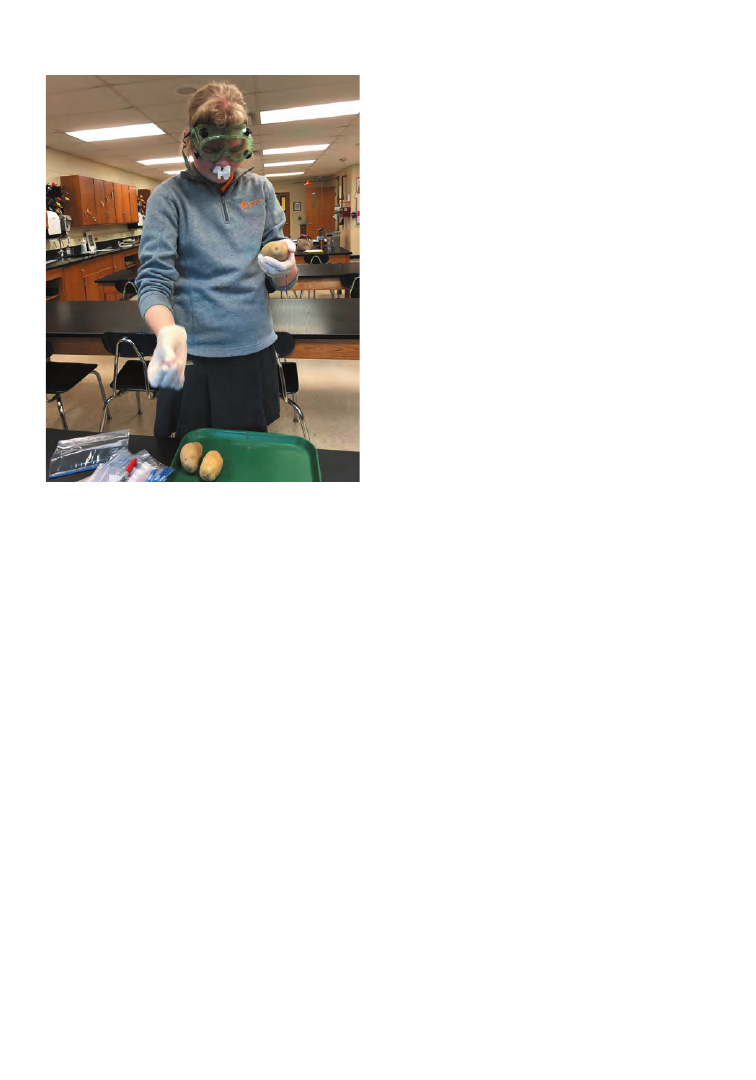
PSB 65 (3) 2019
175
that any inadvertent potato abandonment
in participating students’ lifelong culinary
adventures is almost guaranteed to bring back
memories of their PlantingScience experiences
(Figure 1). Beta-testing high school students
Grace and Summer—from the team “Potat-
bros” (https://www.plantingscience.org/
projects/mmhsharrisspring2019project2)—
described the unique odor during
conversations with their scientist mentor
Donna Hazelwood: “It smelled like a gross,
uncleaned fish tank or burnt old people.”
We are anticipating a lot of interest in this
new module for spring, and we can use more
mentors who are comfortable mentoring for
this new module. Scientists of all career stages
are welcome, and you can choose which
sessions you are available to mentor. Sign up
to mentor here: https://plantingscience.org/
mentorjoin/mentorjoinmain.
We are also recruiting middle and high school
teachers to participate in PlantingScience
with their classes for the spring session. The
program is free to teachers; we provide basic
materials and online mentoring support.
Please direct prospective teachers here to learn
more: https://plantingscience.org/psteachers/
joinplantingscience.
THANKS TO
PLANTINGSCIENCE’S
EARLY-CAREER SCIENTIST
SUPPORT TEAM
A program like PlantingScience requires a
lot of personalized attention and monitoring
to ensure that the hundreds of active student
teams get mentor attention and that teachers
know where to turn when they run into
issues. Keeping all the conversations between
mentors and students going strong requires a
strong support team.
We are very lucky to have had Cari
Ritzenthaler from Bowling Green, Ohio as
our PlantingScience intern since the Fall 2017
session. This session, Cari is joined by new
intern Jessi Griffard from St. Louis, MO. Jessie
is an experienced teacher with a background
in ethnobotany and environmental education,
and we are excited to have her help this fall.
Our interns help to set up the website for
teachers and students, coordinate the work
of the Master Plant Science Team, and help
make sure all teams are getting timely mentor
support.
Figure 1. Students beta-testing the new “Plants
Get Sick, Too!” PlantingScience module prepare
themselves for working with the stinky soft rot-in-
noculated potatoes by using both eye and nose pro-
tection. Check out the new module here:
https://
plantingscience.org/plantsgetsicktoo.

PSB 65 (3) 2019
176
We’d also like to recognize the cohort of
graduate students and postdocs who make
up our Master Plant Science Team (MPST).
These scientists serve as mentors to teams of
students and as liaisons for PlantingScience
teachers. They help teachers make mentor
matches for their teams and ensure good
communication between a teacher and his or
her mentors, as well as step in to help keep
all the student/scientist conversations going
strong. BSA is supporting 14 scientists on the
MPST for 2019-2020:
• Alina Avanesyan
• Auyudh Das
• Aline Rodrigues de Queiroz
• Chloe Pak Drummond
• Kelsey Fisher
• Sonal Gupta
• Laura Klein
• Josh Kraft
• Jill Marzolino
• Funmilola Mabel Ojo
• Carlos Pasiche-Lisboa
• Chelsea Pretz
• Elizabeth Stunz
• Luiza Teixeira-Costa
These graduate students and post-docs help
teachers to teach more plant biology in the
classroom, which is so essential to capturing
student interest and increasing appreciation
for plants. Please thank them for their service
to the field!
Learn more about the benefits and
requirements of being on the Master Plant
Science Team and consider joining next
year’s MPST cohort of graduate students
and postdocs: https://plantingscience.org/
joinmpst. Applications will open at the end of
this academic year.

177
STUDENT SECTION
By Min Ya and Shelly Gaynor
BSA Student Representatives
The Botanical Society of America has been a
society for botanical research and education
for 126 years, and the student portion of its
membership is growing stronger over the
years. For our Botany 2019 meeting in Tucson,
Arizona, we had 497 students (40.7% of the
total!) registered at the conference. BSA is
committed to supporting its student members
in every feasible way. Starting this year, BSA
increased the amount awarded to support
graduate student research from $500 to $1500
per person without decreasing the number
of award recipients. In addition, to keep the
cost of student memberships affordable,
BSA urges professional members of the
society to provide gift memberships to their
students. This year we started to offer 3-year
student memberships for only $50, which
stays effective even if one were no longer a
student during those three years. This year,
BSA also initiated a brand-new paid position
for students to be BSA social media liaisons.
BSA is incorporating students’ perspectives to
stay connected and is trying to shape botany’s
future with its student members!
Students of all levels are also encouraged
to get engaged in the Society, and students’
voices are welcomed in every BSA committee.
Serving as a student representative or on a
BSA committee is an invaluable experience,
and it is a great way to know how professional
societies work and how to organize
conference events. If you are interested in
becoming the next student representative,
serving on a committee (a list of committees
can be found at https://botany.org/
home/governance/committees-committee-
officers.html), or nominating someone for
any of the positions—or even if you have any
questions regarding the positions or BSA in
general—feel free to contact your current
student representatives: Minya (yamin@g.
harvard.edu, @0_minyaaa) and Shelly
(michellegaynor@ufl.edu, @ShellyGaynor).
Of course, make sure to follow and connect
with us on Facebook, Twitter (@Botanical_),
and Instagram (botanicalsocietyofamerica)!
GETTING TO KNOW YOUR
NEW STUDENT
REPRESENTATIVE:
SHELLY GAYNOR
When did you join BSA and what motivated
you to do so?
I stumbled upon botany.org during my
sophomore year of undergraduate at the
University of Central Florida (UCF). I was
tasked with looking for funding sources for my
research project and found the undergraduate
research grant. I started to explore the BSA
website, but I didn’t join BSA until my awesome
summer NSF REU (Research Experience for
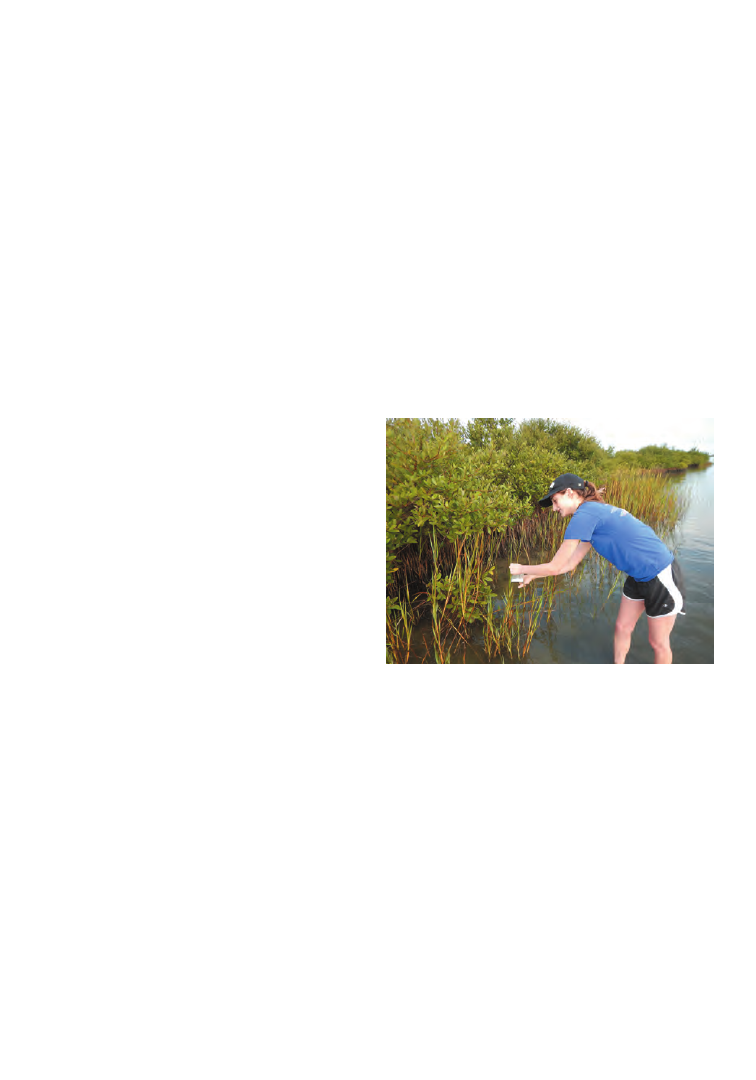
PSB 65 (3) 2019
178
Undergraduates) advisors, Drs. Robert Laport
and Julienne Ng brought me to the annual
meeting in 2016. At this meeting, I met so
many people and became excited to be a part
of this field. I felt like I belonged.
What motivated you to run for the position
of Student Representative to the Board of
Directors?
During my first BSA meeting, I found out
about BSA student chapters. At the time,
I felt very isolated in my interest at my
undergraduate institution. We did not have
any faculty that were doing active botanical
research or members of BSA. Luckily, UCF
filled this gap and hired a botanist and BSA
member, Dr. Chase Mason, in Spring 2017.
With Dr. Mason’s support and the help of
another student, we established a BSA chapter
at UCF. By establishing this chapter, I realized
I wasn’t alone and was able to help create a
community for the numerous students who
shared my interests. Establishing this chapter
of BSA at my alma mater was extremely
rewarding, as it enabled me to see others
become excited about botany (six of the UCF
chapter’s members were even at Botany 2019!).
From this experience, I became passionate
about making fellow students feel welcome
and excited to be a part of BSA. Having
the opportunity to help support students
in BSA motivated me to become a student
representative.
What have you gained from being a student
member of BSA?
I have gained so much from being a member
of BSA. As an undergraduate, BSA gave
me confidence; I was very fortunate and
was awarded a number of research and
presentation awards by BSA. Through the
annual meetings, I met most of my current
collaborators, including my graduate advisors,
Drs. Pam and Doug Soltis.
What’s your research about and how did you
discover your research interest?
Broadly, my research focuses on polyploidy
evolution and ecology. I discovered my
research interest while working in a turf
grass lab as a high school student, where I
encountered polyploidy for the first time using
a slide I prepared. I discovered that the grass
had undergone multiple rounds of genome
duplication, resulting in triple the number of
chromosomes, and I wanted to know why.
What sorts of hobbies do you have?
I’m truly a cat lady and like to spend my
evenings watching Netflix with my cats. I
spend a lot of time with my two cats, Mabel
and Gus, and post many photos of them on
Twitter (@ShellyGaynor). Like most botanists,
I love hiking and traveling. I also enjoy
spending time with my family and make time
to go see them as often as I can. Other things
that fill my time include cooking, baking, and
painting.
PSB 65 (3) 2019
179
QUICK NOTES ON THE
BOTANY 2019
CONFERENCE
We would like to extend a huge “thank you!”
to everyone who attended Botany 2019 in
Tucson, Arizona. It was an excellent meeting
filled with great field trips, workshops, talks,
posters, arts and mixers. We hope you enjoyed
the beautiful Tucson summer, connected
with old friends, made new friends, and were
inspired by all the amazing science during the
meeting.
We are very grateful to Erin Dokter and Nick
Cenegy from the University of Arizona Think
Tank, as well as Gordon Uno and Melanie Link-
Perez, for co-hosting the Statement Writing
Workshop with the student representatives.
We want to thank all the panelists in our
Careers in Botany Luncheon, and our keynote
speaker Betsy Arnold from the University
of Arizona gave an especially touching and
inspiring talk about the paths she took to get
where she is today. We also had a blast in our
undergraduate mixer and student social and
networking event, which was kindly sponsored
by Wiley; students were able to meet and
chat with editors of the American Journal of
Botany and Applications in Plant Sciences. This
year we also had a brand-new CV reviewing
session during the conference. We are very
grateful for all the professional members that
volunteered to be the CV reviewers, and spent
their time helping students to tailor their CVs
and resumes to their desired career paths.
We also loved seeing all the tweets and
pictures shared on social media during the
conference—let’s keep the good vibes for
botany going! We look forward to seeing all of
you again, or getting to know you for the first
time, at #Botany2020 in beautiful Anchorage,
Alaska, on July 18-22, 2020!

180
New BSA Social Media Liaisons
Selected for 2019-2020
BSA is pleased to announce that two Social Media Liaisons have been selected for 2019-2020:
Taran Lichtenberger and Jared Meek. Earlier this year, the BSA Student Representatives asked
the BSA Board to approve the creation of these roles to better engage with and provide a
community for BSA members (both current and potential) via our social media platforms of
Facebook, Twitter, and Instagram. Here they are to introduce themselves!
Taran Lichtenberger
Northwestern University and
Chicago Botanic Garden
Hi! I’m Taran Lichtenberger, a Plant
Biology and Conservation Master’s student
at Northwestern University and Chicago
Botanic Garden. I currently conduct research
on plants from the Colorado Plateau region
using micropropagation techniques and
studying intraspecific diversity. I am also
very passionate about sharing science with
others and helping everyone recognize how
awesome plants are! I have contributed to
other organizations’ social media pages and
am looking forward to interacting with BSA
members and growing the community of
interested botanists, plant science researchers,
and plant enthusiasts.
Jared Meek
Columbia University
Hello! My name is Jared Meek, and I’m a
Master’s student at Columbia University in
the Ecology, Evolution and Environmental
Biology Department. I love learning about
plants, mountains, and plants in mountains!
I’m currently studying a beautifully diverse
genus called Pedicularis (lousewort) in the
Hengduan Mountains of SW China and Tibet.
I’m excited to join BSA’s social media team to
help students have a deeper connection with
the wonderful world of botany.
ANNOUNCEMENTS

PSB 65 (3) 2019
181
HARVARD UNIVERSITY:
BULLARD FELLOWSHIPS IN
FOREST RESEARCH
Annually Harvard University awards a limited
number of Bullard Fellowships to individuals
in biological, social, physical, and political
sciences and the arts to promote advanced
study or the integration of subjects pertaining
to forested ecosystems. The program seeks to
allow mid-career individuals to develop their
own scientific and professional growth by
utilizing the resources and interacting with
personnel in any department within Harvard
University. In recent years Bullard Fellows
have been associated with the Harvard
Forest, Department of Organismic and
Evolutionary Biology, and the J. F. Kennedy
School of Government and have worked in
areas of ecology, forest management, policy,
and conservation. Stipends up to $60,000 are
available for periods ranging from six months
to one year and are not intended for travel,
graduate students, or recent post-doctoral
candidates. Harvard Forest is an equal
opportunity employer. We are committed to
establishing and plan to maintain a diverse
and inclusive community that collectively
supports and implements the Harvard Forest
mission.
Additional information is available on the
Harvard Forest website
(http://harvardforest.
fas.harvard.edu).
Annual deadline for applications is
December 15, 2019.
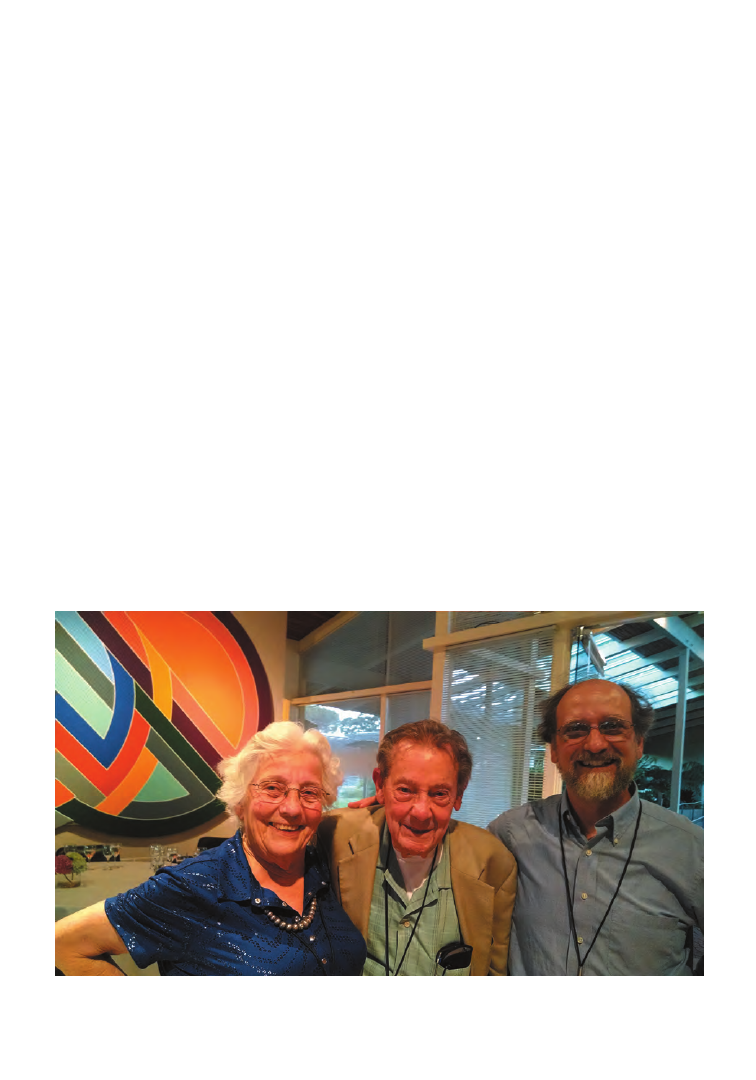
PSB 65 (3) 2019
182
PERSONAL REFLECTIONS
ON A GUIDING LIGHT:
WINSLOW R. BRIGGS
(1928-2019)
On February 11, 2019, the botanical society
and the broader scientific community suffered
the loss of one of our most esteemed members,
Dr. Winslow R. Briggs, an exceptionally
productive scientist, extraordinary mentor,
and beloved colleague. As but two
representatives among many former students
and scientists to have been mentored by
Winslow, we hope to convey our sense of his
ongoing impact on the scientific world, and
on individuals that are fortunate enough to be
included in the long list of associates, mentees,
and friends influenced by this generous and
gifted man.
Several recent tributes have enumerated
many of Winslow’s achievements. His
scientific productivity and the importance
of his contributions to plant biology are
indisputable; for more than seven decades,
Winslow contributed a tremendous amount
to our understanding of light-mediated
regulation of plant growth and development,
and of the biochemical and physiological
mechanisms underpinning those responses.
Throughout his career, from his doctoral work
at Harvard University, an eight-year stint as
a faculty member at Stanford University, his
return to Harvard as a Professor of Biology,
and his subsequent recruitment as Director
of (and ultimately Emeritus positions in)
the Carnegie Institution of Washington’s
Department of Plant Biology and Professor
at Stanford University, Winslow’s scientific
accomplishments and impact across
many fields cannot be overstated. For his
groundbreaking work on auxin redistribution,
phytochrome function, and blue-light
receptors, Winslow was inducted into the
In Memoriam
Winslow Briggs (center) with Ann Briggs and Tim Short at a Carnegie conference in 2014.

PSB 65 (3) 2019
183
prestigious National Academy of Sciences,
the American Academy of Arts and Sciences,
the Deutsche Akademie der Naturforscher
Leopoldina, and the California Academy
of Sciences. As further testament to his
outstanding influence in scientific endeavors,
he earned numerous awards, including:
• The Distinguished Fellow of the Botani-
cal Society of America Award “for pre-
eminence in research ranging from ver-
nation in ferns and hormone transport
to the chemistry and biophysics of light-
mediated growth of plants”
• The Alexander von Humboldt Award to
U.S. Senior Scientists to pursue scientif-
ic research in Freiburg, Germany
• The Stephen Hales Prize for “serving
plant physiology as a teacher and mentor,
as an investigator of how light interacts
with internal metabolic and hormonal
controls, and as a senior spokesperson
for science” and the Adolph E. Gude, Jr.
Award “…in recognition of outstand-
ing service to the science of plant biol-
ogy”, both from the American Society of
Plant Biologists, for which he served as
President in 1975-76
• The U.S. Department of Agriculture –
American Chemical Society Sterling B.
Hendricks Memorial Award
• The Japan Society International Prize
for Biology
There can be no doubt that Winslow was
widely recognized throughout his career as a
brilliant scientist.
While it was through his substantial scientific
achievements that we were initially drawn to
work with him, we soon came to understand
how much more there was to Winslow beyond
his superb research reputation, and we wish to
convey the deeply personal connections that
make Winslow’s a life to celebrate. Winslow
was an inspiring mentor, and the environment
he fostered made going into the lab everyday a
joy. Unless he was traveling, one could expect
him to appear at least once a day in the lab to
look at the latest autoradiographs or consider
the next experiment; and several times each
day he would suggest brewing a cup of tea
as an excuse to talk about the manuscripts
we were outlining, discuss recent papers that
might be relevant to our work or that were
important scientific milestones, or simply
float ideas for possible future experiments.
On multiple occasions he donned a lab coat
and parka to help harvest pea epicotyls or
maize coleoptiles in the cold room under
“reagent grade” darkness, in preparation for
large-scale membrane extractions and protein
phosphorylation experiments—and used
the opportunity to exchange awful jokes and
puns. At the same time, he gave us enormous
latitude to try novel experiments or take new
approaches, allowing us to succeed on our own
terms or to fail and learn from our mistakes.
To wit, when it was suggested that Arabidopsis
might be a good addition to our model species
for biochemical studies, Winslow’s initial
response was, let’s say, less than enthusiastic,
yet he yielded gracefully. After this little
weed proved to be precisely the plant we
needed to finally identify what turned out to
be the phototropin photoreceptor, Winslow
became one of the greatest advocates of using
Arabidopsis as a genetic and biochemical
system.
What these examples have in common is
that Winslow treated us not as underlings to
be directed, but as colleagues with valuable

PSB 65 (3) 2019
184
insights that could alter his preconceptions.
He did not have to push us because he inspired
us to push ourselves. And like co-workers,
rather than leaving us in the lab while he
presented our work, Winslow often gave us
the opportunities to not only attend meetings
with him, but to give the talks and field the
questions on our work. He gladly introduced
us to other members of the community
without regard to their prominence or to the
“sexiness” of their work, and when walking
through poster sessions, he made a point of
stopping at posters that had had few visits
and asked, to the delight of the lonely student,
“Take me through it.” In the same vein, when
sitting in the audience listening to others’
presentations, he would invariably whisper
enthusiastic and positive appraisals of each
talk. He made his own joy for scientific
exploration contagious, and in so doing
was widely respected and revered across the
community. In fact, after presenting new and
unpublished data, attendees would often point
out to us that larger labs would never try to
“scoop” us because his peers held Winslow in
such high regard. Indeed it will be interesting
to watch the field and attitudes within it in
Winslow’s absence; we hope his legacy of
collegial interaction and respect will continue
to live on.
Winslow’s guidance did not end when
we left his lab. He served as a principled
mentor, leading by example. Both of us have
commented frequently on how we strive to
lead our laboratory groups in the manner
exemplified by Winslow: providing criticism
respectfully but clearly, maintaining high
scientific and ethical standards, supporting
resourcefulness in our students, and treating
the lab members as scientific associates in
ways that encourage them to take ownership
of their projects. Whether initiating a local
gathering of plant photobiologists that he slyly
Winslow Briggs with Mannie Liscum, preparing
for his keynote address at his 90th birthday
celebration symposium in April 2018 at CIW-
Plant Biology
.
dubbed the Bay Area Regional
Photomorphogenesis (BARPH) meeting, or
at the annual Carnegie Institution hog roast;
on a lab hike at Henry Coe State Park, where
he and his wife Ann were honored for their
extensive conservation efforts, research, and
volunteer work that was instrumental to
saving the park from closure, or at one of the
many Chinese banquets he (often aided by
one or more of his daughters) prepared for as
many of the extended lab family and visiting
scientists as he could gather; sharing his love
of art and for nature, or demonstrating his
exceptional talent as a pianist, he made us
feel we were part of his life, and we saw him
as part of ours. And, of course, many of his
former students, including both of us, still
adhere to the “Briggs Rule,” stipulating that
under no circumstances should a meeting last
more than an hour!
His mentoring also included a fearless and
unwavering advocacy for his students and
colleagues. He called out the academic
administration that had unjustly denied
advancement to one of his former students

PSB 65 (3) 2019
185
based on gender, and he worked hard to ensure
fair treatment of not only his mentees, but of
faculty and staff with whom he worked. He
fought to protect and expand the “Carnegie
model” that allowed exploration of innovative
ideas and interdisciplinary research,
collaborations with labs across the globe, and
funding to support graduate students and
postdocs built into the institution’s budget.
Yet, despite all the difficult decisions and
complications of heading one of the most
distinguished institutions for plant biology, he
always made time for lunch in the Carnegie
woods or a cup of tea to talk science or to help
with a personal issue—and he never missed
an opportunity to make us laugh.
Although we grieve with his wife Ann, and
their daughters Caroline, Lucia, and Marion,
we also celebrate the scientific and personal
legacy that will hold Winslow in our memories
and propagate in his scientific family for
generations. Winslow was a devoted scientist,
an incomparable mentor, and a dear friend.
We believe we speak for so many whose lives
were touched by Winslow: we were blessed
to have crossed paths with such a unique,
accomplished, humble and gracious humans
beings to have walked this Earth. We will miss
him enormously.
Donations in memoriam can be made to
support the ASPB-Carnegie Winslow Briggs
Mentorship Award at https://carnegiescience.
edu/WinslowBriggs.
- Timothy W. Short and Emmanuel Liscum
ARTHUR OLIVER TUCKER, III
(1945-2019)
Arthur Oliver Tucker, III, retired Research
Professor of the Delaware State University
(DSU), died on 5 August 2019, in Dover,
Delaware, after a short illness.
He was born on 22 June 1945, in Allentown,
Pennsylvania, son of Arthur Oliver Tucker,
Jr., and Clara Tucker. He attended Fountain
Hill High School in Bethlehem, graduating
in June 1963, then graduated from Kutztown
State College (now Kutztown University) in
Kutztown, in June 1967, after majoring in
Biology with a Botany emphasis (B.A.).
Art entered graduate school at the Rutgers
University, New Brunswick, NJ, and
studied plant systematics under Dr. David
E. Fairbrothers, with whom he maintained
friendship until Dave’s death in 2012. His
master’s degree (M.S., 1970) research

PSB 65 (3) 2019
186
involved the variation of leaf proteins in
three species of Mentha (Lamiaceae). He
continued with studies for his doctoral degree
(Ph.D., 1975) studying the morphological,
cytological, and chemical basis of the Mentha
×
gentilis L. hybrid complex.
After a short period (1974-1976) of teaching
a biochemistry laboratory at the Rutgers
University Medical School, he began
his long career (1976-2012, 36 years, on
retirement, becoming Professor Emeritus) at
the Department of Agriculture and Natural
Resources at the Delaware State University,
Dover, DE.
The 36 years at Del State involved teaching,
research, and outreach to the scientific
community and the general public. His
professional interests included ethnobotany,
especially plants used for flavor, fragrance,
medicine and culinary use; systematics
of the mints, Mentha, and especially the
Lamiaceae, flora of the DelMarVa peninsula;
plant essential oil chemistry and analysis; and
botanical and gardening history, including his
latest book (with Jules Janick) on the biota of
the Voynich manuscript.
During the late 1970s he and Prof. Norman
H. Dill formed the beginnings of the Claude
E. Phillips Herbarium (DOV). A new two-
floor facility for the herbarium was erected
near the agricultural and natural resources
research building, which became the center
for collecting and development of the field
botany program in the state of Delaware.
Several historic collections of specimens were
added to the collection, now amounting to
over 150,000 sheets plus specimens of wood,
potpourri, fibers of plant origin, and beads
made of plant materials. Among the more
prominent associates in the herbarium were
Dr. Susan E. Yost, who was the Herbarium
Educator; Dr. Robert F. C. Naczi, his first
successor as curator of the herbarium; and
then Dr. Cynthia Hong-Wa, current curator
of the herbarium.
His teaching load over the years at DSU,
at the undergraduate or master’s degree
student level, included general biology,
general horticulture, horticulture and plant
materials, general botany, plant physiology,
population biology, evolution of vascular
plants, taxonomy of ornamental plants, plant
anatomy and morphology, and systematic
botany.
Among his outreach activities at DSU were
the exhibitions of materials of plant origin
at the herbarium, involving volunteers in
the herbarium activities such as mounting
plants and filing of specimens. Special days of
programs for children were a favorite of his
activities.
Art was a long-time and prominent speaker at
local herb society meetings, the Herb Society
of America, and the International Herb
Society.
The Tucker Research Laboratory, run for
many years with the assistance of Michael
J. Maciarello, studied the flora and rare and
endangered plants of Delaware and Maryland
and undertook the analysis of essential/
volatile oils of culinary and aromatic plants.
Michael was a coauthor on publications with
Art from 1979 through 2011.
Numbering among his many hundreds of
scientific and popular publications are these
books:
Tucker, A. O. and T. DeBaggio. 2000. The big book
of herbs: A comprehensive illustrated reference to
herbs of flavor and fragrance. Interweave Press,
Loveland, CO.

PSB 65 (3) 2019
187
McGuffin, M., J. T. Kartesz, A. Y. Leung, and A.
O. Tucker. 2000. Herbs of commerce. American
Herbal Products Association, Washington, DC
Tucker, A. O. and T. DeBaggio. 2009. The
encyclopedia of herbs: A comprehensive reference to
herbs of flavor and fragrance, ed 2. Timber Press,
Portland, OR, 2009.
Belsinger, S. and A. O. Tucker. 2016. The culinary
herbal: Growing and preserving 97 flavorful herbs.
Timber Press, Portland, OR.
Janick, J. and A. O. Tucker. 2018. Unraveling the
Voynich Codex. Springer, Cham, Switzerland.
Belsinger, S. and A. O. Tucker. 2019. Grow your
own herbs: The 40 best culinary varieties for home
gardens. Timber Press, Portland, OR.
The broad scope of his interests is represented
by the awards he revealed during his very active
career: Faculty Excellence Award in Research
(DSU, 1988); Medal of Honor (Herb Society of
America, 1990); Outstanding Scientist Award
(Association of Research Directors (1994);
Distinguished Research Award (National
Association for Equal Opportunity in Higher
Education); Scientific Award (American
Herb Society, 1996); Industry Achievement
Award (Texas Herb Growers & Marketers
Association, 1996); Professional Award
(International Herb Society, 1997); Excellence
in Research/Creativity Award (DSU, 1998);
Award for Excellence in Horticulture (Herb
Society of America, 1998); 2002 Book Award
(International Herb Association, 2002);
Certificate of Achievement for Positively
Outrageous Service, Delaware (Cooperative
Extension, 2008); Award for Excellence in
Herbal Literature (Herb Society of American,
2004); and Friends of Extension Award
(Delaware Cooperative Extension, 2016).
Art met his wife Sharon Smith (Ph.D., animal
ecology) while they were graduate students
at Rutgers, and they were married for over
48 years. They have three children: Melissa
(husband, Eric Klinker), Angelica (husband,
Jonathan Glatt), and Arthur Oliver IV (wife,
Ana Paula), and four grandchildren.
His non-professional interests included folk
painting and stencil painting; home gardening;
going through phases of collecting old
cultivars of roses and irises, a traditional herb
garden, and a wooded area with small ponds
and wooden arbors; sour-dough bread baking;
cement garden planters; and sculptures. He
also collected antique hand-painted metal
trays, green-man facial sculptures, narwhal
figures, and egg-cups (the last two, his most
recent pastimes).
[Note: The College of Agriculture, Science
and Technology of Del State recently issued
a special commemorative edition, Summer
2019, “Humble giant: Dr. Arthur Oliver
Tucker, III, 1945-2019: A fond farewell to
our paragon of plant science.” [https://indd.
adobe.com/view/74306885-2f8a-45a4-8d27-
71ab6724f720, consulted 6 Sep 2019.]
-Thomas A. Zanoni (retired), New York Botan-
ical Garden

PSB 65 (3) 2019
188
W. MARK WHITTEN
(1954–2019)
Mark Whitten passed away suddenly on 11
April 2019.
Mark was an amazingly talented
botanist. He was an experienced field botanist
who knew the flora of Florida as well as that of
eastern North America extremely well; he was
also equally comfortable in the molecular lab.
In fact, Mark was working regularly both in
the field and in the molecular lab in the days
before his sudden death. He will be missed
by all who knew him for his helpfulness,
botanical expertise, and cheerful nature.
Mark was an extremely warm and friendly
person who readily gave much of his time to
help other scientists. He took undergraduates
as well as graduate students and visiting
scientists in to the field. He also trained
students and visitors in molecular methods.
His love for botany was contagious; part of his
legacy will be the many people who became
interested in botany because of his enthusiasm
and love for plants. Part of his legacy is also
the model he provided for young people by
helping others while being a hard-working
scientist.
Mark was born on 20 October 1954, in
Memphis, Tennessee. He graduated from
Bishop Byrne High School in Memphis in
1972 and then from Thomas More College
in Covington, Kentucky, in 1976, with a
bachelor’s degree in biology. As a college
student, he sampled phytoplankton in the Ohio
River as a consultant to several environmental
companies. He received his M.S. in botany
from the University of Tennessee at Knoxville
in 1979 with a thesis on the pollination
biology of Monarda (Lamiaceae) species
and hybrids in the southern Appalachian
Mountains. He then chose to work with Norris
Williams, then at Florida State University, on
euglossine bee-pollinated orchids in 1979.
When Norris moved to the Florida Museum
of Natural History at the University of Florida
in Gainesville in 1981, Mark transferred there
and spent a summer as a student intern at
Marie Selby Botanical Gardens in the Orchid
Identification Center. His dissertation,
completed in 1985, was titled, “Variation in
floral fragrances and pollinators in the Gongora
quinquenervis complex (Orchidaceae) in
central Panama.” In addition to Norris’s
mentorship, Mark received valuable guidance
on orchids from Robert L. Dressler (Panama)
and Calaway Dodson (Ecuador and Marie
Selby Botanical Gardens); that triumvirate,
along with David Roubik of the Smithsonian
Tropical Research Institute in Panama, were
then leading virtually all work on euglossine
bees and the flowers they pollinate. Mark
collaborated with them and later, with
additional collaborators, expanded on their
work to include osmophores, floral fragrance
components, flight-cage experiments, and bee
anatomy.
In the 1990s, Mark began work in orchid
molecular phylogenetics, using nuclear
ribosomal ITS and plastid sequence data.
He managed the molecular lab in the
Herbarium (FLAS) and collaborated with

PSB 65 (3) 2019
189
researchers throughout the orchid community
on systematics papers involving Laeliinae,
Stanhopeinae, Oncidiinae, Arethuseae,
Angraecinae, Zygopetalinae, Vandeae,
Pleurothallidinae, Sobralieae, Spiranthinae,
and particularly Maxillariinae, for which
he wrote most of the generic treatments for
Volume 5 of Genera Orchidacearum. Mark’s
expertise in sequencing and his willingness
to help everyone extended to work on other
plant taxa such as Polygalaceae, Malvaceae,
Ericaceae, Melastomataceae, Melanthiaceae,
Zingiberaceae, the aquatic fern Marsilea,
mammals (a study of retrieving DNA
from small bones of dried specimens), and
crassulacean acid metabolism. In fall 2013,
Mark started a project to build a comprehensive
species list and DNA-barcode plants in the
Ordway-Swisher Biological Station, along
with Kurt Neubig and Lucas Majure.
Mark joined the Laboratory of Molecular
Systematics and Evolutionary Genetics at the
Museum in 2015 to work with Pam and Doug
Soltis and was deeply involved in their National
Science Foundation grant to determine how
historical constraints, local adaptation, and
species interactions shape biodiversity across
the ancient floristic disjunction between
southeast China and the eastern United
States. He led the field work and sampling
and was also active in the lab. Mark had an
enormous impact in the Soltis Lab beyond
that one project. He took undergraduates,
graduate students, and visitors into the field;
collected samples requested by colleagues
in labs around the world; worked in the
greenhouse; gave sage advice to students; and
developed new methods for the isolation of
high-molecular-weight DNA. He seemed to
be everywhere. Mark had also recently begun
a floristics project at the Etoniah Creek State
Forest and was there at least once every week.
He was never happier than when he was out
collecting plants and building our knowledge
of biodiversity. He will be missed by friends
and colleagues around the world.
-
Douglas E. Soltis, Pamela S. Soltis, and Lu-
cas C. Majure, Florida Museum of Natural
History, University of Florida, Gainesville,
FL

PSB 65 (3) 2019
190

192
BOOK REVIEWS
Biographies
My Father in his Suitcase: In Search of E.J.H. Corner the Relentless Botanist ..................192
Ecology
Carnivorous Plants ................................................................................................................................................195
Economic Botany
Tasting the Past The Science of Flavor & the Search for the Origins of Wine .................196
Physiology
Physiologie der Pflanzen. Sensible Gewchse in Aktion. ....................................................................197
Systematics
Unique Plants and Animals of the Baja California Pacific Islands..............................................199
Sedges and Rushes of Minnesota: The Complete Guide to Species Identification ........200
Identification of Trees and Shrubs in Winter using Buds and Twigs .........................................201
Grasses of Florida ..................................................................................................................................................203
Dictionary of Plant Sciences, ed 4 ................................................................................................................204
Mountain Flowers and Trees of Caucasia ...............................................................................................205
BIOGRAPHIES
My Father in his Suitcase:
In Search of E.J.H. Corner
the Relentless Botanist
By John K. Corner
2013. ISBN: 978-981-4189-47-7.
Soft cover, £24.99, 431 pp.
Landmark Books Pte Ltd, Singa-
pore 199588
Before and during World War II (WWII)
a number of excellent, productive, and
sometimes eccentric botanists roamed South
East Asia. One of them was Edred John Henry
Corner (1906-1996), who started his career
in 1929 as Assistant Director of what is now
the Singapore Botanic Gardens (SBG). [Full
disclosure: I visited the Garden frequently
to work and write the third edition of
Micropropagation of Orchids with my former
post-doctoral fellow, Dr. Tim Wing Yam.]
Richard Eric Holttum (1895-1990), who wrote
an excellent book about the orchids of Malaya
during the Japanese occupation, despite
considering himself to be a fern expert, was
director of SBG at the time, having assumed
the position in 1925 after being assistant
director starting in 1922. He also founded the
Malay Orchid Society, now the Orchid Society
of South East Asia; produced the first orchid
hybrid in Singapore, Spathoglottis Primrose;
and later became the first professor of botany
at the University of Singapore. [Another full
disclosure: starting in 1972 I spent many
months during summers and sabbatical
leaves working at the Botany Department
of this university with its chairman, the late
Professor A. N. Rao, and Professors P. N.

PSB 65 (3) 2019
193
‘Danny’ Avadhani and Choy sin Hew, both
retired now.] It was not long before tension
developed between Corner and Holttum for
reasons that are not clear to this day, but may
well have been due to differences in their
personalities.
Corner quickly became very active in
Singapore and Malaya. He studied fungi, trees,
and the local flora. One result of these studies
was the classic Wayside Trees of Malaya. Not
wanting to climb tall trees to collect study
material, he trained pig-tailed monkeys,
Maracus nemestrina (locally known as berok)
to collect epiphytes, small branches, flowers,
and fruits for him. During my first visit to
SBG in 1969, monkeys still roamed free in the
Garden.
During the brutal WWII Japanese occupation
of Singapore (which the Japanese called
Syonan-to, meaning “Light of the South”),
Corner took it upon himself to save and
protect scientific and cultural institutions. He
developed excellent working relations with the
Japanese officials who were in charge of these
matters. This gave him considerable freedom
of movement, which he used to carry messages
that could have resulted in his execution had
he been caught. He also destroyed nautical
charts, which could have been useful to the
occupiers.
Corner’s close association with Japanese
occupation officials led to accusations of
treasonous collaboration after the war.
He exacerbated these accusations by
strengthening the friendships he forged
during the war and writing books and articles
that praised the Japanese men of science
officials (Corner, 1946, 1981). In reality, there
was no treasonous collaboration. There was
collaboration of dedicated scientists working
together. The Japanese scientists who were
sent to Singapore to assume high-level
administrative positions (in civilian clothes
or military uniforms) were high-integrity,
principled men of science whose goals were
the same as those of their British colleagues.
In fact, some of them ran into problems with
the Japanese military because of their good
relations with Corner and Holttum.
Professor Hidezo Tanakadate, who was in
charge of the Raffles Library and Museum, and
SBG, announced on his arrival in Singapore,
“I conserve cultural institutions.” He was
very kind to Corner and Holtum (Holttum,
1958, 1964, 1977). The Marquis Yoshuchika
Tokugawa, president of the gardens and
the museum, who was equally devoted to
protection of such institutions, fell under
suspicion of being a supporter of the British
because of his kindness. He was relieved of his
duties and returned to Japan. Brigadier General
Professor Kwan Koriba, a plant physiologist
with an interest in orchids (Koriba, 1913, 1914,
1926), who was appointed director of SBG,
held the view that “there is no nationality in
the field of science” (Arditti, 1989). He allowed
Holttum and Corner to continue their work
and treated them kindly; he himself engaged
in research on the periodicity of tree growth
(Koriba, 1958). Koriba also treated the SGB
laborers very well. They called him orang
yang baik sekali, which roughly translates to
“perfect gentleman” (Arditti, 1989). When
food became scarce, Koriba and/or Dr. Yata
Haneda, who became director of the museum
in 1942, invited Corner and Holttum for
lunch following the weekly facilities tours on
Sundays, to make sure that they had at least
one good meal every week (Arditti, 1989).
The treasonous collaboration allegations
were resolved in Corner’s favor once all the
facts became known, but it took years, during
which he was employed by UNESCO. In 1965

PSB 65 (3) 2019
194
he returned to England and was appointed
Professor of Tropical Botany in Cambridge.
Later he was also elected to the Royal Society.
Corner was not an easy man to get along with.
He was dogmatic and argumentative. The
price he paid for his personality was high on
several levels. His son, the author of this book,
left home in 1960 at the age of 19 and never
saw his father again. Corner did not forget
his son. He had a suitcase labeled “For Kay,
wherever he might be” and kept putting in it
items he wished his son to see. This suitcase
came into the son’s possession in 2002, and he
nearly threw it away. Fortunately, he did not,
and took it with him on moving to Australia
where it languished on a shelf in the garage
until 2006 when he opened it on a dull and
wet winter day in Melbourne.
The material in the suitcase plus additional
information the author gathered are the basis
of this book, which the author concluded
with “va pensiero,” two words that mean
“go, thought” (the same two words start the
beautiful and touching Hebrew slaves chorus
in Verdi’s opera Nabucco), “Adieu,” and “I have
found a father.” Being an admirer of both men,
I think that a more apt conclusion would have
been the very personal epitaph Corner wrote
for Kwan Koriba,
“In the footsteps of Kwan Koriba
his one time enemy
his adopted son
his admirer”
There is much more in this book about
a prominent botanist and his life, times,
work, and wandering around the world. I
concentrated on the events in Singapore
during WWII because they show “devotion
to duty...and...sympathetic understanding
of human nature [and] understanding that
transcended racial boundaries, even in times
of war and of privation” (Holttum, 1958).
This is an unusual book that may be of lesser
interest for some in the current generation,
which barely remembers WWII and its
horrors. For me it is interesting, informative,
and touching, not the least because I spent a
good part of my life visiting and working in
Singapore and SBG where the story started
and much of it happened, and because the
book deals with great men of science whose
actions were driven by firm principles and
high integrity during the worst of times. It is
a good book to read and maybe even assign
to students as an example of how good men
should behave during difficult times.
-Joseph Arditti, Professor of Biology Emeritus,
University of California, Irvine
LITERATURE CITED
Arditti, J. 1989. Kwan Koriba: Botanist and sol-
dier. The Gardens’ Bulletin Singapore 42: 1-17.
Corner, E. H. J. 1946. Japanese men of science in Ma-
laya during the Japanese’s occupation. Nature 148: 63.
Corner, E. H. J. 1981. The Narquis–A tale of Syonan-
to. Heineman. Heineman Asia, 10 Kalang Ave., #12-
14/18 Aperia Tower 2, Singapore 339510.
Holttum, R. E. 1958. Kwan Koriba. The Gardens’ Bul-
letin Singapore 17: 339-340. [This is actually signed
R. E. H.]
Holttum, R. E. 1964. A revised flora of Malaya. Vol-
ume I. Orchids of Malaya, ed 3. Government Printing
Office, Singapore.
Holttum, R. E. 1977. A personal view of orchids. In J.
Arditti (ed). Orchid Biology, Reviews and Perspectives,
Vol. I. pp. 15-24. Cornell University Press, Ithaca, New
York.
Koriba, K. 1913. Über die Drehung der Spiranthes-
Ähre. Berichte der Deutsche Botanische Gesellschaft 31:
157-165.
PSB 65 (3) 2019
195
Koriba, K. 1914. Mechanisch-physiologische Stu-
dien über die Drehung der Spiranthes-Ahre. Journal of
the College of Science Tokyo Imperial University 36:
1-180.
Koriba, K. 1926. Observations on a Japanese species of
Taeniophyllum. Proceedings of the Pan-Pacific Science
Congress, Tokyo 2: 1900-1901.
Koriba, K. 1958. On the periodicity of tree-growth in
the tropics, with reference to the mode of branching,
the leaf-fall, and the formation of the resting bud. The
Gardens’ Bulletin Singapore 17: 1-71. [Koriba lived
long enough to read and correct the proofs of this
paper but died before it was published.]
ECOLOGY
Carnivorous Plants
By Dan Torre
2019. ISBN-10: 1789140528;
ISBN-13: 978-1789140521
Hardcover, £16.00. 240 pp.
Reaktion Books, London, UK.
When I taught general bi-
ology, my audience was primarily pre-medical
students. For the most part, this group was
bright and motivated, but they were not very
interested in learning about botany or plant
biology. However, when the time came to dis-
cuss carnivorous plants, their interest seemed
to perk up a bit. Wow, plants can actually do
something interesting—sometimes they even
eat animals! I took advantage of this momen-
tary interest to try to make some broader
points about plant sciences.
It turns out that our society in general has a
great interest in carnivorous plants—and the
tales are fantastical. The author considers
this public fascination in Chapter Four titled
“Attack of the Killer Plants.” Of course, we had
the film “Little Shop of Horrors,” with Audrey
the killer plant and his caretaker Seymour,
that developed a cult following. This film
was adapted into a very enjoyable (at least
from my perspective) off-Broadway musical.
Many of my students seem to think that there
were plants in the Amazonian jungles that ate
humans for lunch!
In reality, plants developed carnivority
as an adaptation to live in nutrient-poor
environments (Ellison and Gotelli, 2001) as
the author points out in Chapter One on the
natural history of these plants. Carnivorous
plants are very distinct with only about 700
species known among all vascular plants. They
expend energy to develop very specialized
leaves to capture their prey. The author divides
these plants into: fast-moving carnivores such
as the famous Venus flytrap, sticky carnivores
such as the sundews, and pitcher plant
carnivores that have fluid-holding vessels. All
of them secrete digestive fluids with enzymes
to digest their prey, which usually includes
insects, but could be larger animals such as
rodents and amphibians. In fact, the Darwins
specifically considered insectivorous plants in
one of their botanical treatises (Darwin and
Darwin, 1888).
Carnivorous plants are increasingly featured
in art and design as summarized in Chapter
Five, which is illustrated with many images
of paintings of this plant group. To me, the
most fascinating art form was the recent
series of glass and metal sculptures. For
example, artist Jason Gamrath depicts large
botanical structures including glass-blown
pitcher plants that are about three feet tall.
In addition, Paul Hill has created large public
sculptures of Venus flytraps made of carbon
steel and fused glass, which are displayed near
their native range in North Carolina. The use
of images of carnivorous plants on stamps
and coins throughout the United States is also
considered.

PSB 65 (3) 2019
196
ECONOMIC BOTANY
Tasting the Past: The
Science of Flavor & the
Search for the Origins of
Wine
By
Kevin Begos
2018. ISBN 978-1-6162-0577-5
Hardcover, US$26.95.
277 + x pp.
Algonquin Books of Chapel Hill, Chapel Hill, NC
More search than science, this interesting and
readable book is the odyssey of a journalist
intrigued with the diversity of wines and
where they originated. The search displays the
author’s prowess as a travel writer and leads us
to exotic places like the Republic of Georgia,
villages in the Swiss Alps, heritage vineyards
in the Palestinian Territories, and more. Here
he explores the renaissance in the use of local
grape varieties for the production of unique
vines. The science is based on his review of the
literature and visiting wine researchers.
The enemy in the book is the large, industrial
wine industry that—as the author constantly
reminds us—depends upon Pinot Noir,
Merlot, Chardonnay, and Sauvignon Blanc
grapes, cultivars that produce high yields and
have been adapted for mass production. Begos
explores little known grape varieties, tastes
their wine, and describes the flavor. As the
author notes, he set off “. . . like a viticultural
Quixote, traveling ancient wine routes,
championing obscure grapes and railing
against the glut of famous French varieties.”
This approach is in line with the movement
for the utilization of indigenous plants and
their products produced in small batches by
local vintners.
The sixth and final chapter discusses collecting
and conserving carnivorous plants. In the late
1800s, specialized nurseries in England and the
United States stocked this plant group, often
with a large selection. In the past, the ethics
of these nurseries was questionable as some
of them decimated wild populations of Venus
flytraps and pitcher plants. Carnivorous plant
societies have been established throughout
the world to promote the conservation and
cultivation of these fascinating plants.
This book, written for the general reader, is part
of a series that integrates information about a
plant group into broader social, cultural, and
historical contexts. The books in this series
typically have a single word title that reflects
a plant group (e.g., cactus, sunflowers). The
volume is beautifully illustrated and compact,
and it comes with a reasonable price. It’s a fun
and enjoyable read.
LITERATURE CITED
Darwin, C. and F. Darwin. 1888. Insectivo-
rous plants. John Murray Publishers, London.
Ellison, A. M. and N. J. Gotelli. 2001.
Evolutionary ecology of carnivorous plants.
Trends in Ecology and Evolution 16: 623-
629.
-John Z. Kiss, Department of Biology, UNC-
Greensboro, Greensboro NC 27402

PSB 65 (3) 2019
197
I found the short chapter on terroir of particular
interest; it reminded me of a German wine
chemist who tasted a wine and told me the
grapes were grown on volcanic soil. He was
right. But Begos discusses a new approach
to understanding terroir, one that considers
the role of microorganisms in the transmittal
of flavor into the wine. The widespread use
of fungicides and other pesticides alters the
biology of the soil. Although Begos does not
use the term, his research shows that the term
ecology could be a stand-in for terroir.
Tasting the Past skillfully combines the biology
of wine with local cultures and colorful
characters. For example, ethnobotanists
would agree that cultivation of wine grapes
originated in Western Asia, then spread to
such centers as Cyprus, Greece, Italy, France,
and Spain. He identifies as heroes those who
often worked against great odds to protect
and propagate autochthonous vines. The
author uses grape varietal DNA research to
document the spread of wine. He also notes
that the progenitors of the wine grape, Vitis
vinifera, were unisexual like other species in
the genus.
There is a discussion of American species of
grapes and how they are being used to develop
varieties suitable for differing climates. As
someone who lives in an area where the native
muscadine grapes, Vitis rotundifolia, are
relished, I was sorry nothing was said about
the role of methyl anthranilate and its role in
wine making. I was originally drawn to the
book because of my work on the ethnobotany
of the Bible and Qur’an, so I was disappointed
that the traditional method of growing grapes
without trellises, as I have seen in Syria,
Palestinian Territories, and Iraq, was not
mentioned. Is there evidence (aside from the
Bible) that this was more common in ancient
times? Myrrh was added to wine (p. 106) in
ancient times, but myrrh is not a pine resin, as
Begos states.
This book nicely combines recent botanical
research with the saga of wine production
through the centuries. Buy a copy and enjoy it
with a glass of one of the highly recommended
Georgian wines.
-Lytton John Musselman, Department of
Biological Sciences, Old Dominion University,
Norfolk, Virginia 23529-0266
PHYSIOLOGY
Physiologie der Pflanzen.
Sensible Gewächse in Ak-
tion.
By Ulrich Kutschera
2019. ISBN-13: 978-3-643-
14226-9
Hardcover, 59.90€, 712 pp.
LIT-Verlag, Berlin
It is fair to say that “plant blindness” is
widespread, even among biologists. Sessile
green organisms are regarded as a kind of
background for the frolicking of mobile
heterotrophs. They may be ancient and
important, but clearly plants not “higher
organisms.” Indeed, during the first half of
the 19th century, many scientists believed that
plants were inhabited by “vital forces.” It was
the great German biologist Julius Sachs (1832–
1897) who flatly rejected this metaphysical
idea and replaced it with a mechanistic
Weltanschauung based on chemistry and
physics—a worldview showing that plants
were every bit as alive as animals and fungi.
Now, in a new splendid textbook, the equally

PSB 65 (3) 2019
198
in humans vs. plants. In Chapter 4, cell-
water relationships are summarized, with
illustrations of the water potential concept
and resurrection plants. In this context,
climate change, which leads to warming of
the atmosphere and dryer soils, is discussed.
In Chapter 6, Kutschera discusses the
translocation of organic substances (sucrose,
etc.) and the newly discovered “heart of the
plant”. To transfer and concentrate sucrose
into the phloem, molecular pumps (SWEET-
translocators) are active in the leaves of crop
plants. These ATP-driven “sugar pumps” are
depicted in a unique model.
In Chapter 9, cell respiration is treated at
length, with a description of metabolic
scaling theory, models of the ATP-synthase,
and the role of reactive oxygen species
(ROS). In this context, soil respiration is
highlighted, and the author again discusses
the topic of climate change (carbon cycle).
But perhaps the most comprehensive chapter
deals with photosynthesis; in Chapter
10, the author describes plants as “living
sunlight-powerplants and CO
2
-removers.”
On approximately 70 pages, illustrated by
38 figures, he describes all key discoveries
in photosynthesis research over the past
200 years, with a focus on the work of Julius
Sachs, Robert Hill (1899–1990), and Melvin
Calvin (1911–1997). In Figure 10.38, the
terrestrial carbon-cycle is depicted, based
on work published in September 2018. The
author points out that, with reference to
climate change, approximately one third of
anthropogenic CO
2
emissions is recycled by
land plants (plus marine photoautotrophs)
and refers to Sachs’s principle of energy
conservation in the biosphere via the
“assimilation of carbonic acid.” Finally,
Chapter 20 brings the book to closure with
general conclusions and a general outlook on
plant physiology. In this chapter, Kutschera
prominent German biologist Ulrich Kutschera
(a corresponding member of the Botanical
Society of America) traces the roots of Julius
Sachs’ experimental plant science and brings
each discipline up to date. A few examples
regarding the content of this expansive book
will have to suffice for this review.
Chapter 1 provides the history of plant
physiology with reference to the “vital force-
concept” as proposed by German philosophers
(Schelling, Hegel, Schopenhauer) and pre-
Sachsian botanists (Meyen, Treviranus,
Schacht, de Candolle). Kutscher also describes
the “Sachs-Pfeffer-revolution” in the botanical
sciences and defines plant physiology,
with reference to his 2015 paper published
in Nature Plants, as “systems biology of
photoautotrophic organisms (embryophytes,
algae, cyanobacteria).” The position of
plants in the Five-Kingdom-System of Life
is described, and the role of bacteria for the
development of embryophytes is addressed
with reference to gnotobiology. Each of the
subsequent 19 chapters begins with a brief
description of the research that Sachs pursued
and published in the respective area of plant
science. These introductory remarks are
supplemented by the pertinent woodcuttings
Sachs created, each reproduced from his
original papers and textbooks. Thus, Chapter
2 describes the principles of experimentation
and deduction of hypotheses vs. theories, with
reference to the Sachsian principle of Factor-
analysis. Basic and applied research using
crop plants is summarized, and the pros and
cons of Arabidopsis as a model organism are
debated. In Chapter 3, plant cell biology is
treated in some detail, with reference to tissue
tension (as described/discovered by Sachs),
cell wall architecture, aquaporins, as well as
the organism concept of plant development
and the significance of stem cells, including
a comparison between embryonic stem cells

PSB 65 (3) 2019
199
explains why Sachs was a genius of biology.
Then he reproduces a number of unpublished
aphorisms taken from the notebooks of Sachs.
Then, a comparison between research in
medicine and plant physiology is provided,
with reference to a forgotten paper of Sachs
(1859), wherein he clearly pointed out that
we can only feed a growing world population
based on plant science. Duckweeds as source
for food are described, and the question
discussed whether or not it would be possible
to feed the world based on organic farming.
The text ends with a description of transgenic
plants (GMOs) and golden rice.
The book is dedicated to the memory of one
of Sachs’ successors of the chair of botany at
the University of Freiburg i. Br. (Germany),
where the 1868 book was written: Hans Mohr
(1930–2016). Accordingly, at the end of the
book, the author juxtaposes philosophical
insights published by Sachs on the “art of
logical thinking” with those of Mohr. Taking
these aspects into account, it is fair to say that
this textbook also should be of interest to
general readers interested in the philosophy
of science. Kutschera’s Magnum Opus is
supplemented by 314 high-quality figures,
inclusive of many color images. Unfortunately,
comparatively few non-German biologists
read German. Therefore, a translation of this
book in English is highly recommended.
- Karl J. Niklas
SYSTEMATICS
Unique Plants and
Animals of the Baja
California Pacific
Islands
Sula Vanderplank, Anny
Peralta García, Jorge H.
Valdez Villavicencio, and
Carlos A. de la Rosa
2017. ISBN-13: 978-1-889-
878-51-5
Flexibound, US$20. Bilingual, 132 pp.
Botanical Research Institute of Texas Press
Of the hundred or so field guides I own, this
is one of the most unique. I didn’t have any
real prior knowledge of these islands, but I
learned a lot from the background provided
in this book. It’s unfortunate that introduced
species have taken such a toll on these islands,
but a lot of biodiversity remains.
The book includes a foreword, introduction,
and about this guide and how to use this guide
sections. The seven islands (Coronado, Todos
Santos, San Martin, San Jeronimo, San Benito,
Cedros, and Natividad) are then described
individually followed by sections describing
the endemic Plants, Reptiles, Birds, and
Mammals and what islands they are known to
occur on. This is then followed with citations,
author bios, and an index. All text is provided
in Spanish and English.
The plant section follows family and then
alphabetical order by genus species. The
descriptions could use more detail as most
lack measurements in terms of size, height, leaf
shape, etc. This may be due to distinct species
in a narrow geography but could be useful
characteristics to someone trying to make a
definitive identification. Line drawings could
also be a useful addition along with flowering

PSB 65 (3) 2019
200
times. The photos are small but clear and
would likely allow for positive identification.
The reptile section also provides short
descriptions of each species without
measurements for the most part, but the photos
should allow for a positive identification.
A few of the descriptions do include some
unfortunate wording in that they list animals
as non-poisonous. Given the context I believe
they should have used non-venomous. The
reference is used for two gopher snakes, which
are constrictors and non-venomous.
Given their mobility I would have expected to
see more birds in the bird section. Introduced
species have taken a toll on the native animals,
and populations are struggling to rebound.
Most species are now protected but have a
long road to recovery. The descriptions are
again short but were likely restricted to allow
for the English and Spanish text. The color
photos show a lot of detail and should allow
for positive identifications.
The mammal section is similar to the others,
but also includes some of the introduced
species that the islands are actively trying
to control and eliminate for reference. All
sections include a designation in the upper
right corner if the species is listed by the
Mexican government or United States of
America with protected status.
This would be a useful guide for anyone
planning to visit these islands for ecotourism
or study.
-David W. MacDougall, CWB® Consulting Bi-
ologist
Sedges and Rushes of
Minnesota: The Com-
plete Guide to Species
Identification
By Welby R. Smith (Photos by
Richard Haug)
2018.
ISBN 978-1-5179-0275-9
Paperback, US$39.95.
667 pp.
University of Minnesota Press, Minneapolis, MN
Over the last 10 years, a number of fine books
have been produced that cover the Cyperaceae
or Carex for Midwestern states (Wisconsin,
Indiana) or other regions that have significant
overlap with the Midwest (Maine). Now
we have a book that covers the family for
Minnesota, and even includes the Juncaceae,
which is a welcome addition to the world of
graminoid field guides. This book starts with
the typical “how to use this guide” detailing
how Smith has approached the difficult task
of covering these challenging groups. The
species descriptions were made de novo, with
measurements taken exclusively from 25,000
specimens collected across Minnesota. So,
this guide shows the range of variation within
the covered taxa but based solely on Minnesota
populations. This is an interesting approach,
and one that I greatly appreciate, as it allows
the reader to see how local populations within
a species’ overall range may differ from one
another. Another feature that I really like
about the book is the inclusion of three maps
of Minnesota in the introduction. These
depict major substrate types, major vegetation
zones at the time of public land survey (1847-
1907), and the three major vegetation zones
distilled into three provinces. This provides
a lot of context for understanding species’
distributions, and I wish more guides would
include maps like these.

PSB 65 (3) 2019
201
A key to all Juncaceae and Cyperaceae
genera that occur in Minnesota follows the
introduction, and then all genera are treated
separately, in alphabetical order. One aspect
of this I don’t like is that the two families are
not treated separately, but rather Juncus and
Luzula are included within the middle of the
Cyperaceae genera. I would have preferred
that each family was treated in a separate
section of the book (this same annoyance
is in Smith’s trees and shrubs book). Each
genus has a description and notes on its range
worldwide, in America, and in Minnesota.
Then each species is treated alphabetically,
with a key to species if more than one occurs
in the state. The bulk of this portion of the
book is filled by Carex, of course, with a key
to sections; each section then has its own
treatment and key. Regardless of genus, all
species are treated the same way: a two-page
spread with description, range map and
notes, habitat notes, comparison with similar
species, and other facts on the left-hand page,
and photos on the right-hand page. This is a
very welcome layout as it doesn’t require the
user to flip pages to read about one individual
species. The range maps show individual
specimen dots across a map of Minnesota
depicting both county borders and the three
vegetation provinces. This relays interesting
phytogeographical information showing
that many species are found only in certain
provinces. The photos are all excellent in
quality, showing habitats, plant habit, and
close-ups of leaf and flower features. The
highlight of these is that almost every species
has a close-up shot of all the floral parts
separated from one another and together.
For instance, for any given rush, this photo
will show a single intact flower next to the
removed capsule, next to removed seeds. This
photo approach is greatly appreciated when
comparing the bracts, achenes, and perigynia
in Carex. Taxonomy is up-to-date in most
cases (e.g., Schoenoplectiella is split from
Schoenoplectus, Lipocarpha is subsumed into
Cyperus). The book itself is not too bulky or
heavy and is easily portable, despite its length.
This is a very well-done, beautiful book that
will be quite useful to people looking to learn
these interesting and often intimidating
plants—I highly recommend it.
-John G. Zaborsky, Botany Department,
University of Wisconsin – Madison, Madison,
Wisconsin, USA; jzaborsky@wisc.edu
Identification of Trees
and Shrubs in Winter
using Buds and Twigs
By Bernd Shulz
2018. ISBN: 978-1-84246-
650-6.
Cloth, US$80. 368 pp.
Royal Botanic Gardens, Kew
This book offers a systematic and
comprehensive guide to the identification
of winter twigs and shrubs native and
naturalized to Central Europe, as well as
genera in cultivation. Originally published in
German, this edition is an English translation.
According to the preface, this second edition
adds 40 new genera and 60 new species,
removes approximately 10 species, and
includes an updated phylogenetic framework.
The introduction to the text presents a brief
historical overview of the study of bud
morphology, beginning in 1675, as well
as a review of early publications for the
identification of woody plants in winter. It also
includes a discussion on the biogeography
and ecology of deciduous woody plants. The
introduction is suitable for a general audience

PSB 65 (3) 2019
202
with an interest in the topic. It is written from
a central European perspective with the text,
including such phrases as “further species
came to us” or “our climate,” without explicitly
defining the location the author is referencing
until a later section of the book.
The book includes a section on how to use
the text and a fairly in-depth introduction
to woody plant structure and development,
with an emphasis on buds. This section
is illustrated by many drawings in which
structures are color-coded. This approach is
visually engaging and facilitates comparison
between examples. However, I found myself
having to flip back to find the relevant color
key to remember what each color represented.
Further, the colors used are semi-realistic,
ranging from reds and browns to greens
and dark yellows. A colleague with limited
color perception suggested to me that more
variation in intensity might make the colors
easier to differentiate. This section provides a
succinct introduction to the topic suitable for
students of botany and serves as a reference for
traits and terms used in the keys. Included at
the end of the book are references for further
reading, an index for scientific and common
names, an index of botanical terms, and a
quick reference key treating the 270 most
common species in Central Europe.
The heart of the book is comprised of an initial
identification key and descriptions of each
family. The initial key leads to genus or, in a
few cases, species. Line drawings represent
each taxon in the key, as well as select traits.
This key relies primarily on bud (vegetative
and flower), twig, and plant habit characters,
and I found it relatively easy to interpret. The
line drawings add clarity. Most, if not all, of
the characters can be observed with the naked
eye or a hand lens. The family descriptions
include identification keys for subfamilies,
genera, and/or tribes. These keys emphasize
bud and twigs but sometimes use fruit and
seed characteristics. In addition, for each
species, there is a description of the woody
structures, accompanied by illustrations of
twigs with buds and sometimes fruits and/
or seeds. The illustrations are stunningly
beautiful and lifelike such that I was able to
recognize many of the species I am familiar
with solely from the drawings.
Despite the European emphasis of the text, all
24 of the deciduous tree and shrub species I
regularly assign to my General Botany students
at Creighton University, which include a
mix of trees native to Nebraska and trees
cultivated on campus, were at least mentioned
in the text; all but three (Ostrya virginiana,
Populus deltoides, and Ulmus americana)
were included in keys to species. Oddly, U.
americana is represented by a fairly extensive
description with an illustration but is left out
of the key to Ulmus. I had less luck with a list of
deciduous trees assigned in General Botany at
the University of Tennessee - Knoxville, with
3 of the 11 additional trees (Celtis laevigata,
Magnolia grandiflora, and Ulmus alata) not
included in the text at all. I am not particularly
experienced in identifying woody twigs, but I
successfully used the keys for the three winter
twig examples I had available, identifying Acer
saccharum and Aesculus hippocastanum to
species and P. deltoides to genus.
This book is a worthy edition to any botanical
library. The identification keys and species
descriptions are accessible and useful, and the
illustrations are exquisite. Although this book
is quite comprehensive, the European focus
means that it may need to be supplemented
by other sources if used in North America or
other parts of the world.
--Mackenzie Taylor, Department of Biology,
Creighton University

PSB 65 (3) 2019
203
Manual
Yarlett,
1996
Taylor,
2009
Hall,
2019
Species
100
218
463
Keys
no
no
yes
Drawings
some
some
>500
Photogaphs
96
>350
none
Maps
100
none
none
Grasses of Florida
By David W. Hall
2019. ISBN: 9780813056050
Hardcover, US$80.00. 353 pp.
University Press of Florida,
Gainesville, Florida, USA
Until this year, there
were not too many recent
sources to identify grasses in Florida. Besides
three editions of the Guide to the Vascular
Plants of Florida by Wunderlin and Hansen (no
illustrations), there were only two illustrated
manuals published recently: Yarett (1996)
and Taylor (2009). The book under review
represents a substantial improvement of this
situation. Major features of the three manuals
can be summarized in the following table.
In the reviewed manual, species are first
identified into 17 tribes, then to genera,
species, and (when appropriate) varieties.
Based on my counting, among 463 species,
298 are native, 8 are doubtfully native, 155 are
naturalized or casual, and 2 are just cultivated.
In total, more than 50 species included in
this manual (mostly introduced) were not in
the last edition of the Guide to the Vascular
Plants of Florida (Wunderlin and Hansen,
2011). The nomenclature is up to date (e.g.,
Pennisetum is treated just as a section in
Cenchrus and Calamovilfa as a section in
Sporobolus; some species formerly treated as
Leptochloa are now in Dinebra, Diplachne, or
Disakisperma). The list of relevant literature is
sufficiently complete. Surprisingly, however, a
reference to the Manual of Grasses for North
America (Barkworth et al., 2007) is missing.
Illustrated vocabulary of morphological terms
would make this manual more useful for non-
professionals.
In this decade, some grass identification
manuals are reaching a completely new level.
Detailed photographs illustrating hard-to-see
diagnostic features are becoming the standard
(Judziewicz et al., 2014; Roché et al., 2019). Still,
the Hall’s manual, with just classic drawings,
fills an important gap in our graminological
literature. It will be an extremely useful source
of information for all botanists working in
Florida and for everybody interested in grasses
of the Southeast.
– Marcel Rejmánek, Department of Evolution
and Ecology, University of California, Davis, CA
LITERATURE CITED
Barkworth, M. E., L. K. Anderton, K. M. Capels, S.
Long, and M. B. Piep. 2007. Manual of Grasses for
North America. Intermountain Herbarium and Utah
State University Press, Logan, UT, USA.
Judziewicz, E. J., R. W. Freckmann, L. G. Clark, and
M. R. Black. 2014. Field Guide to Wisconsin Grass-
es. The University of Wisconsin Press, Madison, WI,
USA.
Roché, C. T., R. E. Brainerd, B. L. Wilson, N. Otting,
and R. C. Korfhage. 2019. Field Guide to the Grasses
of Oregon and Washington. Oregon State University
Press, Corvallis, OR, USA.
Taylor, W. K. 2009. A Guide to Florida Grasses. Uni-
versity Press of Florida, Gainesville, FL, USA.
Wunderlin, R. P. and B. F. Hansen. 2011. Guide to the
Vascular Plants of Florida, ed 3. University Press of
Florida, Gainesville, FL, USA.
Yarett, L. L. 1996. Common Grasses of Florida and
the Southeast. The Florida Native Plant Society, Spring
Hill, FL, USA.

PSB 65 (3) 2019
204
Dictionary of Plant
Sciences, ed 4
By Michael Allaby, editor.
2019. ISBN-13: 9780198833338;
e-ISBN: 9780191871665
Paperback, $19.95; £14.99. 616
pp.
Oxford University Press, Oxford,
UK
Michael Allaby is a dictionary writer who
has delivered many editions about nature
and environmental science. He is the General
Editor of the Oxford Dictionaries of Botany,
Zoology and Ecology, and co-author of the
Dictionary of Geology and Earth Sciences.
Other publications include The Gardener’s
Guide to Weather & Climate, The Dictionary
of Science for Gardeners, the Encyclopedia of
Weather and Climate; the Facts on File Weather
and Climate Handbook; and the DK Guide to
Weather.
According to Allaby’s foreward to this new
fourth edition, he adjusted the entries about
plant taxonomy to make them conform to the
classification of the Angiosperm Phylogeny
Group (APG). That necessitated adding new
entries for plant families and moving some
of the earlier families +/- unchanged to their
new locations. Fully adopting the APG system
has also required adding entries for orders
that were missing in the third edition. He also
reproduces APG phylogenies to illustrate how
they are constructed.
It certainly is advantageous to have family
names conform to APG with this new fourth
edition. This edition increased the entries
about chemical compounds of medicinal
importance. Terms about ecology and soil
types are included, along with some entries
for fungi and bacteria that impact plants.
The Geologic Time Scale identifies important
stages in plant evolution. Common names
now appear in a 15-page appendix where each
is cross-referenced to other entries where they
are mentioned.
Although Allaby asserts that he removed from
the main dictionary common names of plants,
other organisms, and products such as timber,
there are some inconsistencies. For example,
goat tang, japweed, and sena remain in the
Dictionary, whereas some everyday terms such
as apricot, kudzu, mung bean, and yam are
absent from the appendix of common names.
Sorghum appears only among the short list
of crop plants in an appendix that lists names
with their region and approximate date of
domestication; that incomplete list could be
expanded. Two Latin binomials on that page
are misspelled: both the genus and species
names of foxtail millet, as well as the species
name of rye. While the dictionary holds
“more than 7,700 entries covering aspects
of plant sciences including biochemistry,
plant physiology, cytology, ecology, genetics,
evolution, biogeography, earth history and
earth sciences,” many terms that I searched
within my interests were absent (e.g., caudex,
caudiform, lignan, prickle).
The Dictionary
of Plant Sciences might be a useful resource
for plant studies, especially for international
students, amateur botanists, and gardeners,
and under conditions where internet access
is limited; the paperback format makes the
dictionary portable. (Incidentally, British
spelling is used [e.g., fibre, soya bean].)
–Dorothea Bedigian, Research Associate, Mis-
souri Botanical Garden, St. Louis, Missouri,
USA

PSB 65 (3) 2019
205
Mountain Flowers and
Trees of Caucasia
By Shamil Shetekauri, Martin
Jacoby, and Tolkha Shet-
ekauri
2018. ISBN 978-1-78427-173-
2 (Pbk); ISBN 978-1-78427-
173-9 (ePub); ISBN 978-1-
78427-175-6 (PDF).
£29.99; $40.00. 380 pp.
Pelagic Publishing, Exeter,
UK.
The Caucasus Mountains include “the highest,
most dramatic, least spoiled and least known
mountain ranges of the northern hemisphere
after the Himalayas and Rockies.” The area
supports about 6400 species of vascular plants,
of which a quarter are endemic to the region.
This is the highest percentage of endemism
in the temperate world, thus one of the most
important hotspots of biodiversity on earth.
First published privately in 2009, this revised
edition corrects errors, updates the taxonomy
to follow the Angiosperm Phylogeny Group
arrangement, and increases the number of
species described. The order of genera within
each family generally follows that of Flora
Europaea.
The first and third authors are father and son,
of Georgian ancestry. Shamil is Professor of
Botany at Javakhishvili State University, Tbilisi,
while his son works in the Department of
Plant Conservation in the National Botanical
Garden of Georgia, Tbilisi. Martin Jacoby is
English; after a career as educator, he led field-
studies tours in Caucasia, Europe, Africa, and
South America for 20 years.
Featuring 1049 color photos and 5 color
maps, the book opens with an essential
topographic map of the Caucasus, facing the
Preface. Regarding the book’s organization,
using numbers to identify each plant family,
supported by the handy 15-page Species
Index, makes the field guide easy to use by
non-botanists, as does the 11-page Botanical
Vocabulary. A list of synonyms to the names
used in the guide are included. Seven pages
are given to a chapter titled Vegetation of
Georgia with vegetation zones and patterns
of endemism—reasonable since two of
the authors are Georgian, but it leaves one
wondering about the rest of the region. Their
Bibliography omits a key reference work: Red
List of the Endemic Plants of the Caucasus:
Armenia, Azerbaijan, Georgia, Iran, Russia,
and Turkey, previously reviewed in these pages
(Bedigian, 2014b).
Mountain Flowers and Trees of Caucasia claims
to describe and illustrate nearly all the
wildflowers, trees, and shrubs that can be
found over 1000 m above sea level—1009
species—in the Caucasus. It was prepared,
initially, as a field guide “to encourage you
to visit the mountains of Caucasia to delight
in their unique and spectacular assemblage
of flowering plants, and so contribute to its
conservation.” The authors narrowed the
species selected as those that occur at altitudes
over 1000 m and that are conspicuous, locally
abundant, or endemic. Omitted are ferns,
grasses, sedges, and rushes.
However, while the colorful photographs
are certainly appreciated, the contents are
not comprehensive. For example, Tulipa
armeniaca, discussed at length in the review
of The Genus Tulipa (Bedigian, 2014a), is
overlooked. Likewise, although a photograph
of Iris iberica is included, listing its occurrence
in Georgia and Azerbaijan, surprisingly, the
authors failed to mention Iris iberica subsp.
elegantissima in the Oncocyclus section. That
is a noteworthy subspecies of Iris iberica—a
rhizomatous perennial, from Armenia, Iran,
and Turkey—that was discussed in the review

PSB 65 (3) 2019
206
of the Red List of the Endemic Plants of the
Caucasus: Armenia, Azerbaijan, Georgia, Iran,
Russia, and Turkey (Bedigian, 2014b).
This close scrutiny should not detract from the
pleasure of enjoying an illustrated field guide
to the lovely flowers and trees of the Caucasus,
until the reader can visit those mountains
personally.
–Dorothea Bedigian, Research Associate, Mis-
souri Botanical Garden, St. Louis, Missouri,
USA
LITERATURE CITED
Bedigian, D. 2014a. Plant Science Bulletin 60(3): 170-
172. The Genus Tulipa. Tulips of the World. Diana Ev-
erett. 2013. Kew Publishing, Royal Botanic Gardens,
Kew.
Bedigian, D. 2014b. Plant Science Bulletin 60(3): 179-
180.
Red List of the Endemic Plants of the Caucasus:
Armenia, Azerbaijan, Georgia, Iran, Russia, and Tur-
key. James Solomon, Tatyana Shulkina, and George
E. Schatz, editors. 2014. Missouri Botanical Garden
Press, St. Louis, Missouri
.
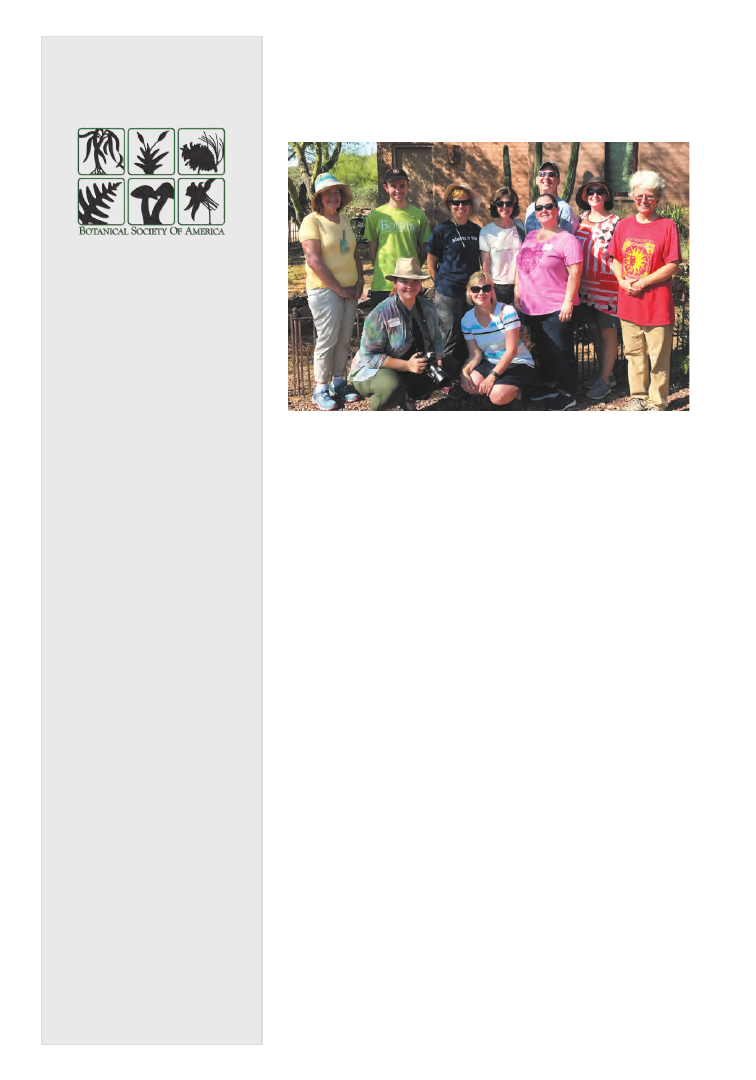
Plant Science Bulletin
The Botanical Society of
America is a membership soci-
ety whose mission is to: pro-
mote botany, the field of basic
science dealing with the study
& inquiry into the form, func-
tion, development, diversity,
reproduction, evolution, & uses
of plants & their interactions
within the biosphere.
ISSN 0032-0919
Published quarterly by
Botanical Society of America, Inc.
4475 Castleman Avenue
St. Louis, MO 63166-0299
Periodicals postage is paid at
St. Louis, MO & additional
mailing offices.
POSTMASTER:
Send address changes to:
Botanical Society of America
Business Office
P.O. Box 299
St. Louis, MO 63166-0299
bsa-manager@botany.org
The yearly subscription rate
of $15 is included
in the membership
Address Editorial Matters (only) to:
Mackenzie Taylor, Editor
Department of Biology
Creighton University
2500 California Plaza
Omaha, NE 68178
Phone 402-280-2157
psb@botany.org
Plant Science Bulletin
Fall 2019 Volume 65 Number 3
BSA staff members who arrived early to Tucson to begin
preparing for Botany 2019 were offered a wonderful
opportunity: an invitation by long-time BSA member
and Tucson resident Martha Hawes to tour her 65 acres
of land!
Hawes, a professor at University of Arizona who
specializes in plant pathology, donated the land in 2016
to expand Tucson Mountain Park, which helps preserve
the area's wide variety of plants and wildlife. BSA staff
members were thrilled to hike the land and experience
the beauty of Tucson up close.
Ll-180 Spectrometer
Capture the spectral compositon
of your light sources
with a single click.
www.licor.com/180
 View on Issuu.com
